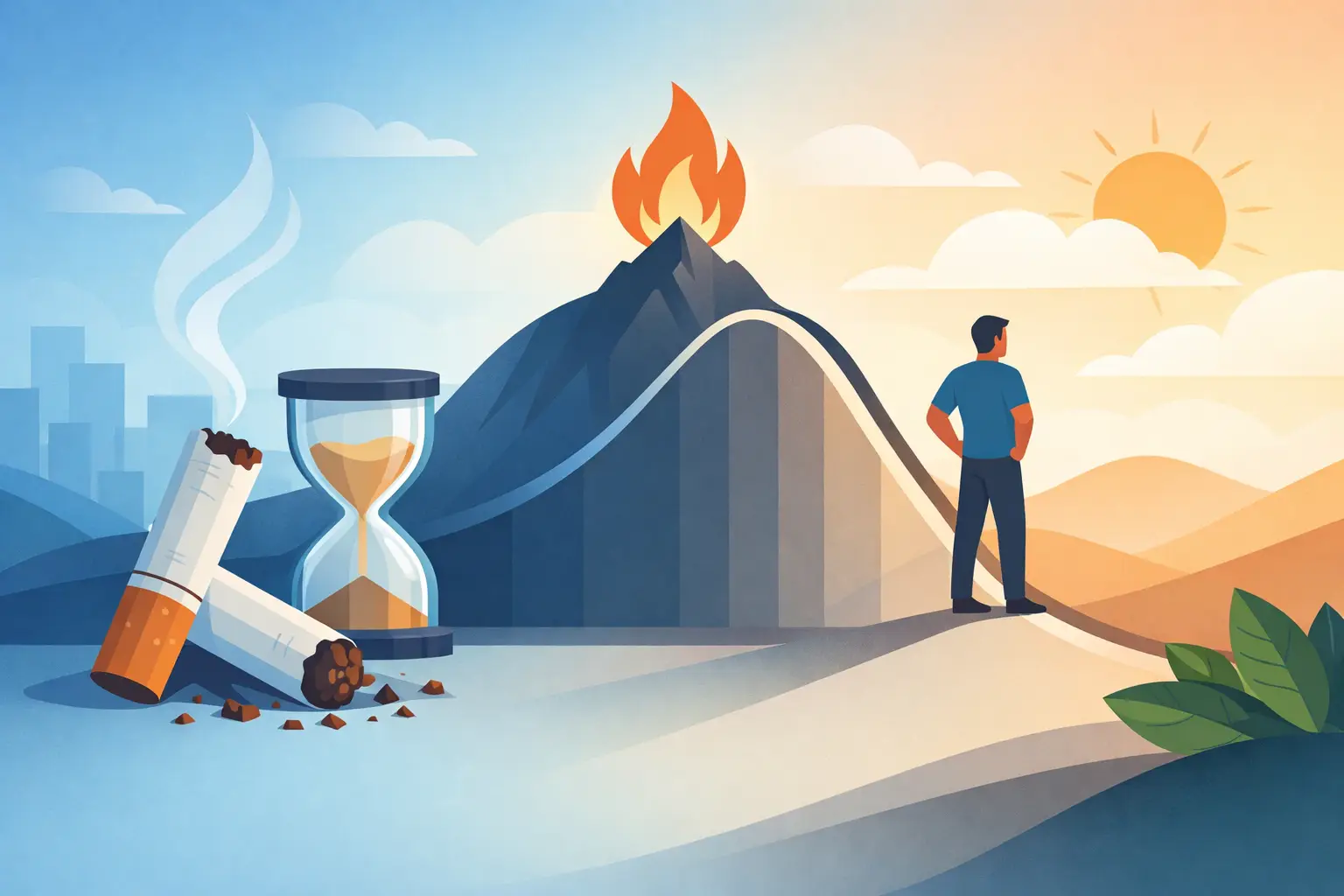
The question, when do nicotine cravings peak, has a clear short answer: usually during the first two to three days after you stop. But the real answer matters more. Cravings do not follow a neat schedule, because nicotine withdrawal and your everyday smoking routines hit at the same time. Knowing when the rough moments are likely to show up gives you more control when an urge tries to take over.
A craving is not proof that you need a cigarette. It is a signal that your brain expects nicotine, or that a familiar moment – coffee, a work break, a drive home, a stressful call – has always included smoking. The urge feels urgent, but it moves on. Your job is to get through the next few minutes without feeding the addiction.
When Do Nicotine Cravings Peak?
For most adult smokers, physical nicotine withdrawal is strongest about 48 to 72 hours after the last cigarette. Nicotine itself leaves the body fairly quickly. As levels drop, your brain pushes back with strong urges, irritability, restlessness, trouble concentrating, and a feeling that something is missing.
The first 24 hours can be difficult because you are breaking a pattern that may have been repeated dozens of times a day. By day two and day three, the chemical pull often reaches its most intense point. This is the stretch when many people tell themselves that one cigarette will calm everything down. It may quiet the discomfort briefly, but it restarts the cycle you are trying to break.
After the first few days, physical withdrawal commonly begins to ease. That does not mean cravings disappear. Weeks later, a familiar trigger can still create a sharp, convincing urge. Those are usually habit cravings, not a sign that nicotine withdrawal is getting worse.
The Timeline: What to Expect After Your Last Cigarette
Every smoker has a different history, so there is no single quitting clock. How long you have smoked, how often you smoke, your stress level, and whether you use nicotine replacement can all affect the experience. Still, this general timeline helps you prepare.
The first 24 hours
You may feel an urge at the exact times you normally light up: after waking up, with coffee, after a meal, in the car, or during a break. These cravings can arrive fast. They may last only a few minutes, but several can stack up throughout the day.
The key is to change the routine, not just grit your teeth through it. Take your coffee somewhere different. Keep your hands busy during a drive. Walk around the block after lunch instead of standing in the usual smoking spot. Small changes interrupt the automatic connection between a moment and a cigarette.
Days two and three
This is often the peak withdrawal period. You might feel impatient, tense, distracted, or unusually hungry. Sleep can be off. A minor inconvenience may feel like a reason to smoke.
Do not negotiate with the craving in this window. Make the decision before it shows up: no nicotine today. Then use a replacement action immediately. Drink cold water, chew gum, text someone, take ten slow breaths, or step outside without buying cigarettes. Action gives the urge less room to build momentum.
The first two to four weeks
The chemical withdrawal should gradually become less intense, though some people still get frequent cravings. This is where situational triggers become obvious. A Friday night drink, a traffic jam, or a stressful deadline can feel tougher than the third day because the moment carries a strong learned association.
This stage is not about being weak. It is about retraining. Each time you get through a trigger without nicotine, you teach your brain that the situation can happen without smoking.
Months later
An occasional craving can show up long after quitting, especially around alcohol, stress, social events, or seeing someone else smoke. These urges are often less physical and more memory-driven. They tend to pass quickly when you do not act on them.
A surprise craving is not a relapse. It is simply a reminder to use the tools that got you through the first week.
Why Certain Cravings Feel So Much Stronger
Nicotine addiction has a chemical side, but cigarettes are also built into the rhythm of daily life. That is why quitting can feel incomplete when you only address nicotine and ignore the ritual.
For some smokers, the hardest craving is the first one of the morning. For others, it is after dinner, on a work break, or while having a cocktail with friends. These situations combine expectation, place, movement, and hand-to-mouth habit. Your brain has learned that the moment ends with a cigarette.
Stress is another major trigger. Smoking may feel calming, but nicotine withdrawal itself can create tension between cigarettes. Lighting up relieves that withdrawal for a short time, which can make smoking seem like stress relief. Breaking that loop takes practice, especially when life is already demanding.
How to Get Through a Peak Craving
Most cravings rise, crest, and fade within a few minutes. Your goal is not to make yourself love the feeling. Your goal is to outlast it without nicotine.
Start by naming what is happening: “This is a craving, not an emergency.” Then delay your response. Set a five-minute timer and commit to doing something else until it ends. Stand up, change rooms, wash your hands, brush your teeth, or take a short walk. A change in location can be surprisingly powerful because it breaks the scene your brain associates with smoking.
Keep your trigger moments planned for. If morning coffee is tough, do not face it empty-handed. If you usually smoke in the car, clean out the ashtray, bring water, and keep something within reach for the drive. If alcohol makes you want cigarettes, consider reducing or avoiding it during the first few weeks while you build confidence.
You can also use approved nicotine-replacement products or medications if they are right for you. A doctor or pharmacist can help you understand options and combinations, particularly if you smoke heavily, have medical conditions, are pregnant, or take prescription medicines.
Keep the Ritual Without Feeding Nicotine Dependence
For many adults, gum, lozenges, and patches help with nicotine withdrawal but do not fully answer the physical ritual of smoking. There is still the familiar pause, the hand-to-mouth motion, the inhale, and the reason to step away from a stressful moment.
A nicotine-free, tobacco-free herbal cigarette can be a behavioral substitute for adults who want to separate that ritual from nicotine. Smoke Free USA uses toasted cocoa bean outer layer in cigarette-style products, including regular, menthol, cherry, and vanilla options. It may help some smokers get through familiar trigger moments without returning to nicotine.
That trade-off deserves honesty: inhaling smoke of any kind is not risk-free. A nicotine-free herbal cigarette is not the same thing as clean air, and it is not for anyone under 21 or for people who do not already smoke. The practical purpose is to help adult smokers move away from nicotine while they work on changing the routines tied to cigarettes.
Build a Plan for Your Personal Peak Times
Do not wait for a craving to create your strategy. Write down the three moments when you are most likely to smoke and decide what happens instead. Maybe your morning plan is coffee plus a different seat outside. Maybe your work-break plan is a five-minute walk. Maybe your after-dinner plan is clearing dishes right away and calling a friend.
Keep the plan simple enough to use when you are irritated and tired. The best quit tool is the one you will actually reach for during a bad moment.
The first two or three days may be the loudest part of nicotine withdrawal, but they are not permanent. Every craving you let pass is evidence that you are taking control back – one coffee, one break, one stressful day at a time.