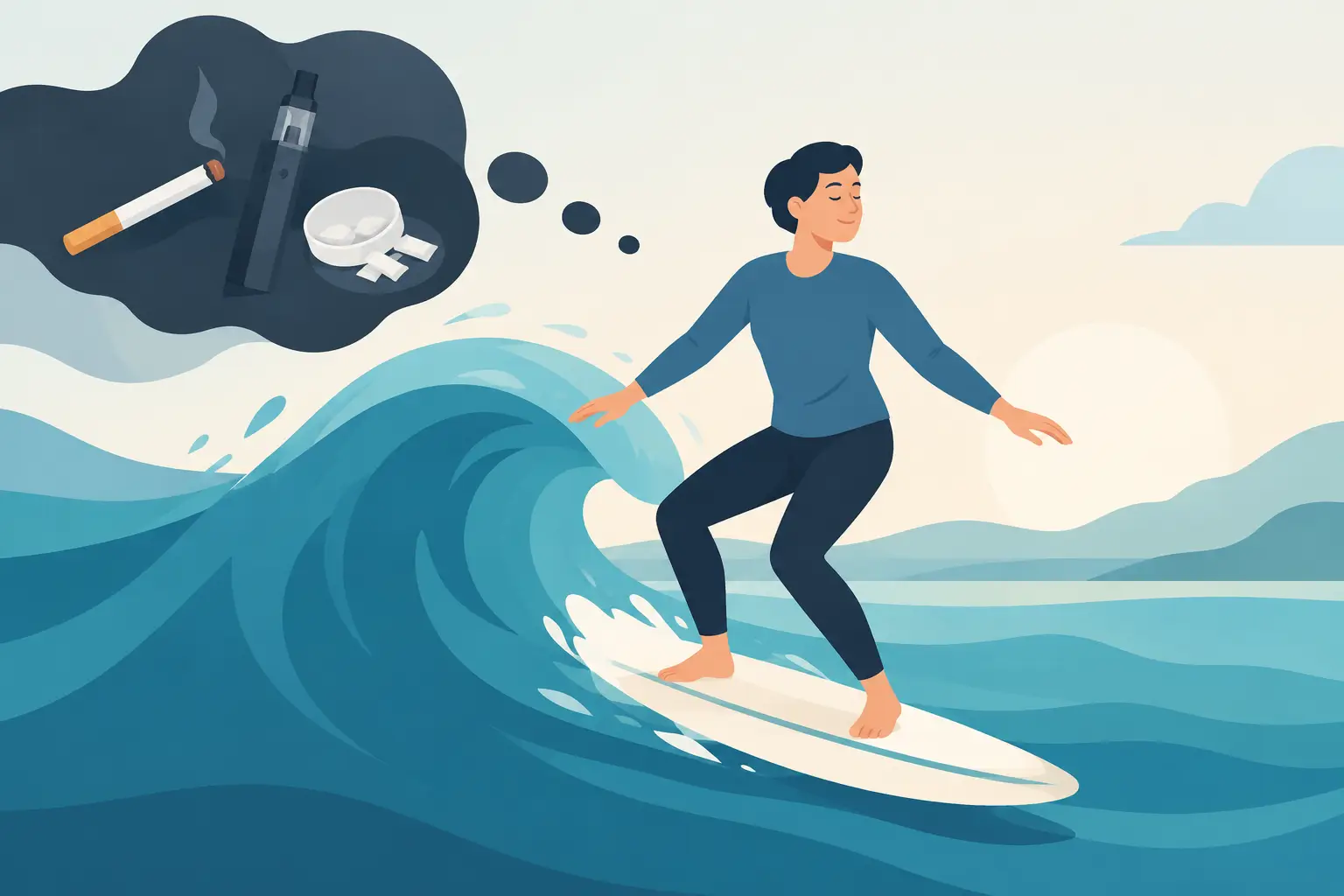
A cigarette craving can feel like an order: smoke now, deal with everything else later. That feeling is real, especially when it hits with morning coffee, after a meal, on a work break, or during a stressful drive. But a craving is not a command. Learning how to use urge surfing gives you a practical way to create space between the feeling and the cigarette.
Urge surfing does not ask you to pretend you do not want nicotine. It asks you to notice the urge, let it rise and fall, and choose what you do next. That small shift can help you break the automatic connection between a trigger and lighting up.
What urge surfing actually means
Think of a craving like a wave. It builds, reaches a peak, and eventually loses strength. When you fight it by telling yourself, “I should not feel this,” the urge can seem bigger and more urgent. When you give in immediately, your brain learns that cravings get a cigarette fast.
Urge surfing is the middle ground. You acknowledge the craving without obeying it. You stay with the uncomfortable sensations long enough to see that they change.
For some people, a craving may pass in a few minutes. For others, especially during the first days or weeks without nicotine, it can feel longer and sharper. The goal is not to feel perfectly calm. The goal is to get through the next few minutes without making the craving the boss.
How to use urge surfing when a craving hits
Start the moment you notice the urge. Do not wait until you are standing outside with a lighter in your hand. Catching a craving early gives you more room to respond.
First, name it plainly: “I am having a nicotine craving.” Not “I need a cigarette.” That wording matters. A need sounds permanent and urgent. A craving is an experience that will move through you.
Next, check in with your body. Where do you feel the urge? It may show up as tightness in your chest, restlessness in your hands, tension in your jaw, a hollow feeling in your stomach, or racing thoughts. Describe what is happening without judging it. You might tell yourself, “My hands feel jumpy. My throat feels tight. I am thinking about smoking.”
Then slow your breathing. Take a steady breath in through your nose, pause briefly, and breathe out slowly. You do not need a complicated breathing routine. Give yourself five slow breaths and pay attention to the exhale. A longer exhale can help interrupt the panic that often rides alongside a craving.
Now imagine the urge as a wave. Ask yourself whether it is rising, peaking, or falling. Notice its intensity on a scale of one to 10. Wait a minute or two, breathe, and check again. The number may not drop right away, but it often changes. That change is proof that the feeling is temporary.
Finally, choose a replacement action for the next five minutes. Get a glass of water, walk around the block, text someone, brush your teeth, chew gum, or step away from the place where you usually smoke. You are not trying to solve the rest of your life. You are getting through this wave.
Use the physical ritual to your advantage
Nicotine dependence is not only about nicotine. Many smokers also miss the pause, the hand-to-mouth motion, the inhale and exhale, and the feeling of stepping away from pressure for a few minutes. That is why quitting can feel difficult even when patches, gum, or medication help reduce physical withdrawal.
Urge surfing works better when you prepare for the ritual side of smoking. Keep your hands and mouth busy during your known trigger moments. Hold a warm drink during your morning routine. Take your break outside without your usual cigarette. Keep a straw, toothpick, gum, or another simple substitute nearby for the drive home.
Some adults use nicotine-free, tobacco-free herbal cigarettes as a temporary behavioral substitute while they work to break nicotine dependence. Smoke Free USA offers options designed for smokers who want to keep a familiar smoking moment without nicotine or tobacco. That may fit some routines, but it is not a risk-free choice: inhaling smoke can still irritate the lungs and carries health concerns. Consider your personal health situation and speak with a healthcare professional about the quit approach that makes sense for you.
The key is to make the substitute intentional. Do not simply swap one automatic action for another. Before using any replacement, pause and identify the trigger: “I am stressed,” “I am bored,” or “I always smoke after lunch.” That awareness is what helps you build control over time.
Plan for your strongest smoking triggers
A craving rarely appears out of nowhere. Most people have repeat situations that set it off. Coffee, alcohol, traffic, phone calls, work pressure, and being around other smokers can all become deeply wired into the smoking routine.
Pick your two toughest triggers and make a specific urge-surfing plan before they happen. If coffee is the problem, change where you drink it for a week, use a different mug, and practice five slow breaths before your first sip. If work breaks are the problem, take your break at a different time or walk somewhere your usual smoking group does not gather.
Alcohol deserves extra attention. It lowers your guard and can make an old habit feel like a great idea. If drinking is a major trigger, consider reducing or skipping alcohol early in your quit attempt. If you do drink, decide in advance what you will do when the craving hits. A plan made while you are clear-headed is stronger than a promise made in the moment.
What to say to yourself while you wait
Cravings often bring persuasive thoughts: “Just one will not matter,” “I cannot focus without it,” or “I have had a hard day, so I deserve this.” Do not debate every thought for 20 minutes. Answer it with one short line and return to the wave.
Try: “This is uncomfortable, not dangerous.” Or: “I can wait five minutes.” Or: “Smoking will restart the cycle, but this urge will pass.” Use words that sound believable to you. Empty motivational slogans will not help if you do not buy them.
If you slip and smoke, do not turn one cigarette into a full return to the habit. A lapse is information. Ask what happened right before it: Were you hungry, stressed, drinking, exhausted, or caught off guard? Then adjust your plan for that situation. Progress comes from responding faster and learning your patterns, not from punishing yourself.
When urge surfing needs more support
Urge surfing is a skill, not a magic trick. It can be powerful, but many smokers do best with more than one tool. Nicotine replacement therapy, prescription medications, counseling, quit coaching, and support from friends or family can all make the process more manageable.
Talk with a healthcare professional if withdrawal feels overwhelming, if you have a mental health condition that is getting harder to manage, or if you are pregnant or have heart or lung concerns. Getting help is not losing control. It is using every available advantage in a fight that deserves a serious plan.
The next craving will probably not be convenient. It may show up when you are tired, irritated, or certain you cannot handle one more thing. Let it show up anyway. Name it, breathe through it, give it a few minutes, and make the next choice yours.