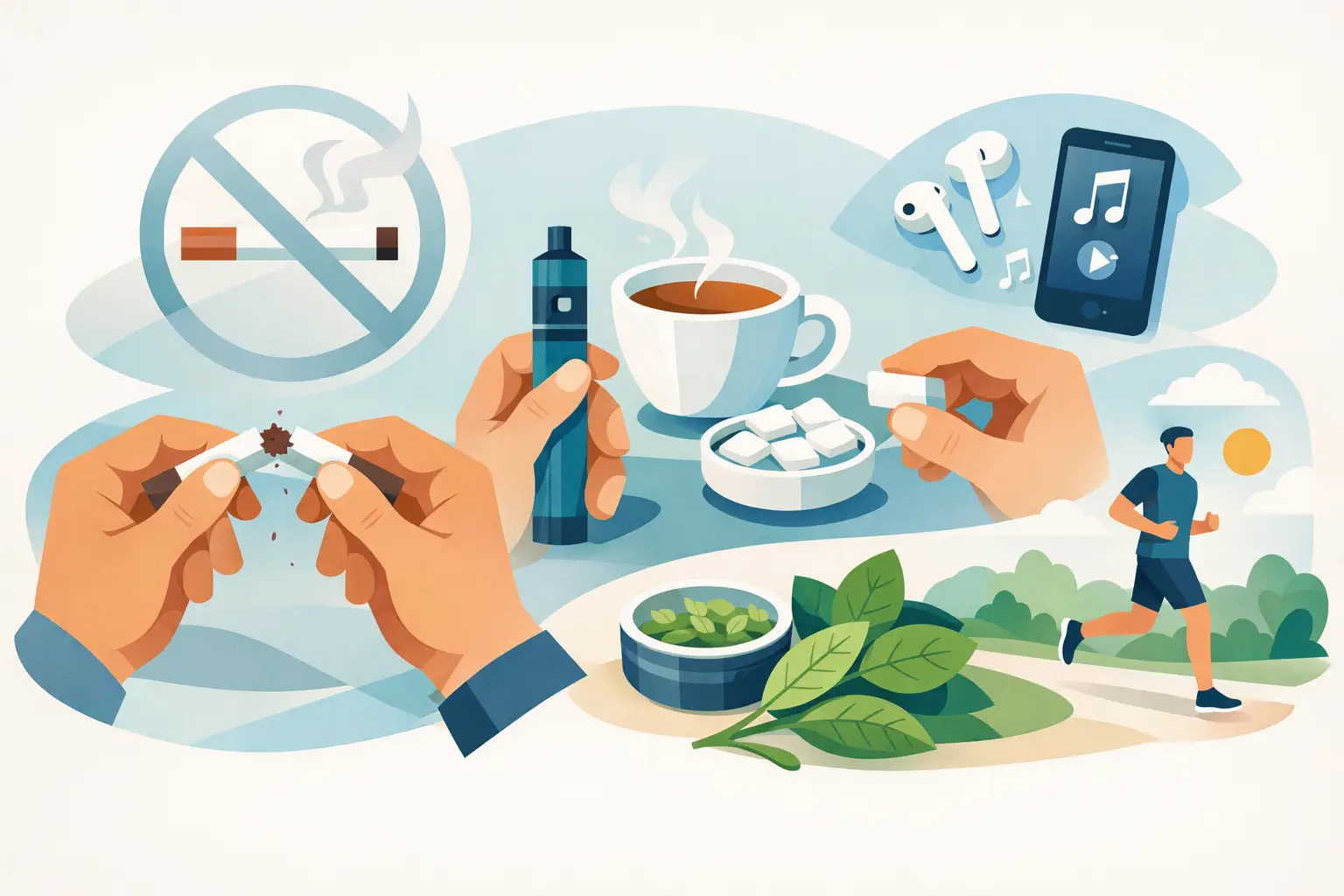
The best cigarette ritual substitutes do more than keep your hands busy. They give you a real answer for the moments when a cigarette feels automatic: the first coffee of the day, a tense phone call, the drive home, a break outside, or a drink with friends. If nicotine gum, patches, or willpower alone have left you reaching for a pack again, the missing piece may be the ritual.
Nicotine dependence has a chemical side, but smoking is also deeply practiced behavior. Your body learns the motions: reaching, lighting, inhaling, exhaling, and taking a few minutes away from whatever is demanding your attention. Breaking nicotine addiction gets easier when you build a replacement plan for those moments instead of trying to white-knuckle every craving.
Why Cigarette Rituals Are So Hard to Replace
A cigarette often marks a transition. It says, “I’m waking up,” “I need a break,” or “I’ve had enough for now.” That is why simply removing cigarettes can leave a gap that feels bigger than people expect. The nicotine craving may fade and return in waves, while the familiar routines keep calling for something to happen.
The right substitute depends on the trigger. Someone who smokes in the car needs a different tool than someone who smokes after meals. A person who misses the hand-to-mouth motion may not get much relief from a walk alone. Someone who wants a pause from work may benefit from a calming routine but still miss the act of smoking.
You do not need one perfect replacement for every situation. You need a few dependable options that make the next cigarette less automatic.
7 Best Cigarette Ritual Substitutes for Real-Life Triggers
1. Nicotine-Free Herbal Cigarettes
For adults who miss the physical experience of a cigarette, a nicotine-free, tobacco-free herbal cigarette is often the closest ritual substitute. It preserves the familiar format: holding a cigarette, taking a smoke break, and having something to do with your hands and mouth. The key difference is that it removes nicotine from the experience, helping separate the routine from the chemical pull.
Smoke Free USA offers herbal cigarettes made with toasted cocoa bean outer layer, available in regular, menthol, cherry, and vanilla varieties. They are designed for adult smokers who want a familiar smoking moment without tobacco or nicotine. They can also fit alongside a broader quit plan that includes nicotine replacement products, if that approach works for you.
Be realistic about the trade-off: inhaling any combusted material is not risk-free. But for people focused on breaking nicotine dependence while managing the ritual that gum and patches do not address, a nicotine-free cigarette can be a practical bridge.
2. A Coffee Replacement Routine
Coffee and cigarettes are paired so closely for many long-term smokers that one can trigger the urge for the other. Do not assume you have to give up coffee forever. Instead, change the sequence around it.
Try drinking your coffee in a different location, using a straw with an iced drink, or pairing the cup with a nicotine-free herbal cigarette if retaining the smoking ritual helps you avoid tobacco cigarettes. You can also add a small action after the last sip: rinse your mug, chew mint gum, or take a two-minute walk. The goal is to teach your brain that coffee can still feel complete without nicotine.
3. Strong Flavor for Sudden Cravings
A sharp taste can interrupt a craving fast. Cinnamon gum, peppermint mints, sour candy, flavored toothpicks, and crunchy snacks give your mouth something immediate to focus on. Keep them where cigarettes used to live: in the car, near your desk, in a jacket pocket, or beside the coffee maker.
This substitute works best for short, surprise urges. It may not fully replace a 10-minute smoke break, but it can get you through the first few intense minutes. Cravings rise, peak, and pass. Giving yourself a strong flavor during that peak can stop an impulse from turning into a trip to the store.
4. A Break That Actually Feels Like a Break
Many smokers do not just crave a cigarette. They crave permission to step away. If your workday has trained you to use smoking as your only pause button, replace the break itself, not only the cigarette.
Go outside without your phone. Stand in the same spot where you used to smoke, take ten slow breaths, stretch your shoulders, and drink cold water. Keep the break short and repeatable. It may feel awkward at first because your brain expects the full smoking routine. Repetition is what makes the new pause start to feel natural.
If standing outside with nothing in your hands makes the urge worse, use a more physical substitute during the transition. That could mean herbal cigarettes, a drink, gum, or a small object to hold. There is no prize for making this harder than it needs to be.
5. Something for Driving Triggers
Driving is one of the most stubborn smoking cues because it combines boredom, stress, and habit. Start by removing cigarette reminders from your vehicle: empty the ashtray, clean the interior, and keep lighters out of reach. Then replace the old car kit with a new one.
Stock water, gum, mints, sunflower seeds, or flavored toothpicks in the console. Choose a podcast or playlist you reserve for drives, especially commutes that used to include cigarettes. If you regularly smoked at red lights or in traffic, give your hands a job by keeping both on the wheel and using a mint or gum before the drive begins.
For longer trips, plan your stops. A planned break with a substitute is far easier than an unplanned stop that becomes a cigarette purchase.
6. A Post-Meal Reset
The cigarette after a meal can feel like punctuation. Your food is done, and smoking tells your brain the moment is complete. Create new punctuation instead.
Brush your teeth, use mouthwash, make tea, clear the table right away, or take a brief walk around the block. These are simple actions, but they work because they close the loop. If you tend to smoke after dinner, avoid lingering at the table where the routine used to happen.
This is also a good time to use a nicotine-free herbal cigarette if the smoking motion is the part you miss most. Over time, you may find that the meal trigger weakens because you have practiced ending meals differently.
7. A Stress Plan You Can Use in 60 Seconds
Smoking can feel calming, but nicotine often keeps the cycle going by creating withdrawal discomfort that another cigarette temporarily relieves. When stress hits, you need a response that is ready before you feel overwhelmed.
Try this: step away, put both feet on the floor, breathe in slowly through your nose, and make the exhale longer than the inhale. Repeat five times. Then use your chosen substitute: take a brief walk, chew gum, hold a warm drink, or take a nicotine-free smoke break. You are not pretending stress does not exist. You are choosing not to let stress make the decision for you.
Build a Substitute Plan Before the Craving Hits
The most effective cigarette ritual substitutes are the ones you can reach without thinking. Write down your top three smoking moments and assign an option to each one. For example, coffee may call for a herbal cigarette or mint; driving may call for gum and water; work stress may call for an outdoor breathing break.
Keep your substitutes visible and easy to access. If your plan is buried in a drawer while cigarettes are in your pocket, habit will usually win. Make the better choice the convenient choice.
Also expect imperfect days. A slip does not erase progress, and it does not mean your plan failed. It means you found a trigger that needs a stronger replacement. Adjust, restock, and keep moving. Every time you choose a substitute instead of a tobacco cigarette, you are taking back a routine nicotine once controlled.