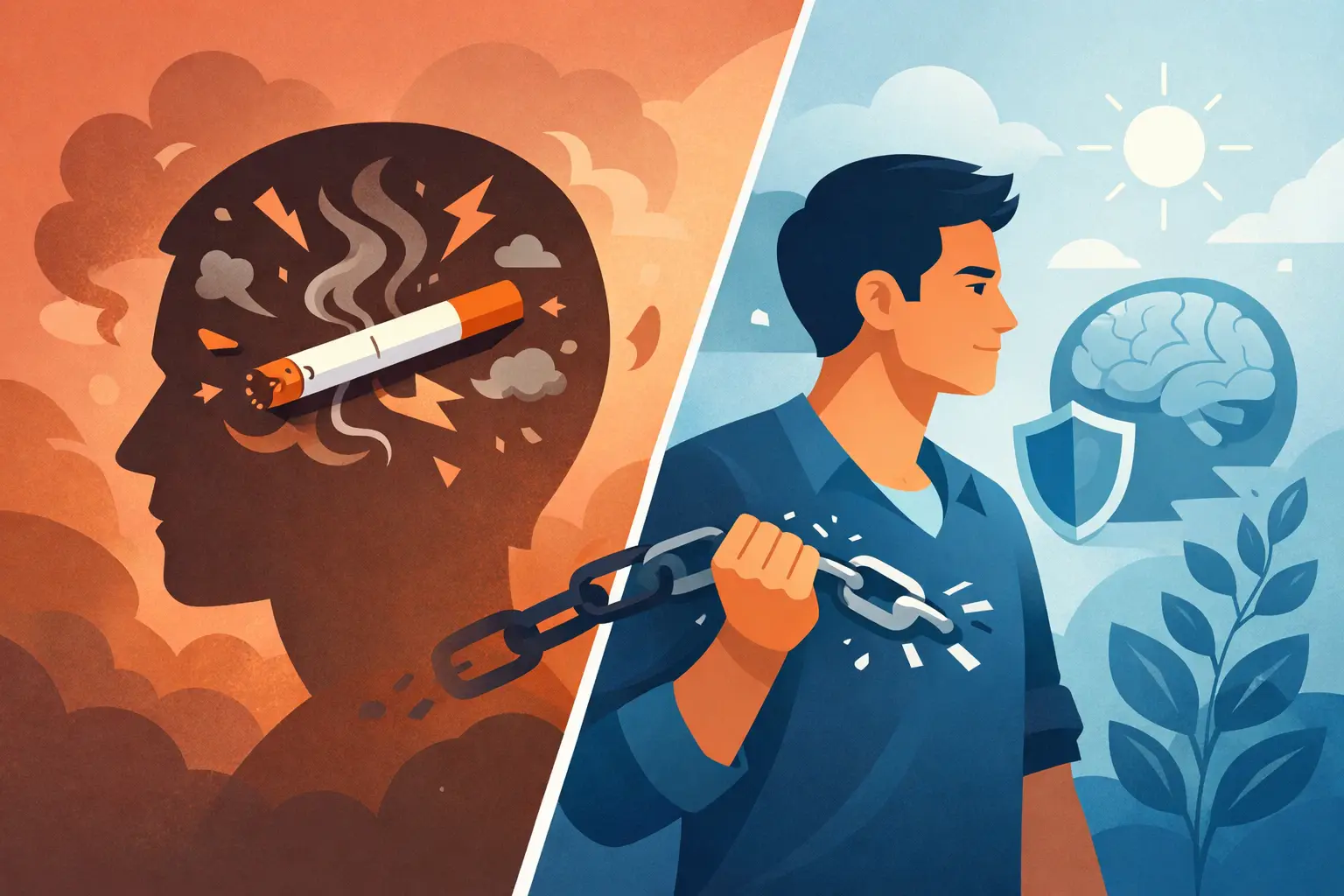
That sharp urge for a cigarette after coffee, during a drive, or the second stress hits is not a lack of willpower. If you have asked, “what causes cigarette cravings,” the honest answer is that more than one force is usually pulling at you at once. Nicotine dependence creates a physical demand, while your routines teach your brain exactly when smoking is supposed to happen.
That is why simply deciding to quit can feel so difficult. You are not only changing a chemical dependence. You are changing familiar breaks, movements, social moments, and ways of coping. The good news is that once you can identify what is driving a craving, you can prepare for it and take back more control.
What Causes Cigarette Cravings in the Body?
Nicotine is the biggest physical driver. When you smoke, nicotine reaches the brain quickly and triggers the release of dopamine, a chemical associated with reward and relief. Over time, your brain starts to expect that nicotine at certain intervals. When the level drops, withdrawal can begin.
A nicotine craving may feel like restlessness, irritability, trouble focusing, anxiety, or a strong feeling that something is missing. For some people, it is a sudden, intense urge. For others, it is a low-level pull that hangs around all day. The timing varies, but cravings often feel strongest in the early days after cutting back or quitting because your body is adjusting to life without regular nicotine.
This is not a personal failure. It is a learned physical response. A craving rises, peaks, and passes, even when it feels urgent in the moment. The goal is not to pretend it is easy. The goal is to have a response ready before that urge starts making decisions for you.
The Habit Can Be as Powerful as Nicotine
Many smokers discover that nicotine is only part of the fight. Your hands, mouth, senses, and schedule may all be trained around smoking. You may miss holding a cigarette, taking a smoke break, watching the smoke, or having a familiar reason to step outside for five minutes.
A cigarette can become attached to dozens of small moments without you realizing it. Morning coffee may signal “time to smoke.” Finishing a meal may create the same expectation. Getting into the car, talking on the phone, waiting for someone, or ending a shift at work can all activate the routine.
This is why nicotine gum, patches, or medication can help some adults but still leave others frustrated. They may address nicotine withdrawal, yet they do not necessarily replace the physical ritual. If the hand-to-mouth habit and the smoking moment are still missing, the craving can feel unfinished.
For adults who want to break nicotine dependence while keeping a familiar ritual available, a nicotine-free, tobacco-free cigarette alternative can be one practical piece of the plan. Smoke Free USA offers herbal cigarettes made with toasted cocoa bean outer layer, giving adult smokers a familiar cigarette format without nicotine or tobacco. It is not a magic answer, and smoke of any kind is not risk-free, but changing the product can help separate the ritual from the nicotine that keeps the cycle going.
Common Trigger Moments That Spark a Cigarette Craving
Triggers are the people, places, feelings, and routines your brain connects with smoking. They are not the same for everyone, but recognizing yours turns a vague urge into a problem you can plan around.
Coffee, meals, and daily transitions
For many long-term smokers, the first cigarette is tied to coffee, not just nicotine. The taste, the pause, and the start-of-day rhythm are all connected. The same is true after lunch or dinner. You may not be physically hungry for a cigarette, but your brain has been taught that a meal is incomplete without one.
Instead of trying to erase the moment, change what happens in it. Drink your coffee in a different spot. Take a short walk after eating. Keep your hands occupied. If maintaining the familiar smoking break helps you avoid reaching for tobacco, use that break intentionally while you build a new routine.
Stress, boredom, and difficult emotions
Cigarettes often feel like stress relief, but nicotine can also fuel the cycle. Withdrawal creates tension, smoking briefly relieves that tension, and the brain learns that the cigarette was the solution. Then the next drop in nicotine starts the discomfort again.
Stress cravings are real, but a cigarette does not solve the source of stress. It gives you a pause, a breath, and a break from the situation. You can keep the pause while choosing a different response. Step outside, slowly breathe, text someone, drink water, or use a nicotine-free substitute if the ritual itself is what you need in that moment.
Boredom works differently. It leaves empty space, and smoking has filled that space so often that reaching for a cigarette becomes automatic. A brief task can interrupt the pattern: clean the car, walk around the block, make tea, or call a friend. The activity does not have to be profound. It just has to get you through the peak of the urge.
Alcohol, social settings, and other smokers
Drinking alcohol lowers inhibition, which is why a quit attempt can feel solid all week and suddenly fall apart during a night out. Social smoking can be especially difficult because the trigger includes conversation, atmosphere, and seeing others light up.
You do not have to avoid every social event forever, but early on, choose your situations carefully. Tell a trusted friend you are cutting nicotine. Bring a plan for smoke breaks. Consider limiting alcohol until you know how it affects your urges. If friends smoke, give yourself permission to step away rather than standing in the exact setting that has always led to another cigarette.
Driving, work breaks, and waiting
These are automatic triggers. Your body may reach for a pack before you have consciously decided to smoke. Keep your car, desk, and usual break area prepared with alternatives. Remove cigarettes, lighters, and ashtrays when possible. Put something else within reach, whether that is water, mints, a straw, or a nicotine-free cigarette option for adults who need the familiar hand-to-mouth action.
How to Respond When a Craving Hits
A craving is easier to handle when you stop treating it like an emergency. Try giving yourself a short delay before acting. Tell yourself, “I can wait 10 minutes.” During that time, change your location or do something physical. Cravings often lose intensity when you break the setting that triggered them.
Pay attention to the specific need underneath the urge. Are you looking for nicotine? A break? Something to do with your hands? Relief from tension? A way to fit in socially? The answer helps you choose a response that actually fits instead of fighting every craving with the same tool.
It also helps to expect uneven days. You may feel confident one afternoon and deeply tempted the next morning. That does not mean your plan is failing. Progress is often a series of repetitions: notice the trigger, use a different response, and prove to yourself that the urge can pass without nicotine.
Build a Plan Around Your Real Life
The strongest quitting plans are specific. Do not just say you will avoid cigarettes. Decide what you will do at 7 a.m. with coffee, after a stressful call, in the car, and when friends go outside to smoke. Those are the moments where your plan earns its value.
If nicotine withdrawal feels overwhelming, talk with a healthcare professional about approved cessation treatments and support. Some adults use nicotine-replacement options while also changing their behavioral routine. Others focus on a nicotine-free smoking substitute as they work through the physical and situational pull. What works depends on your smoking pattern, health history, and the triggers that have kept you smoking.
You have more leverage than a craving wants you to believe. Every time you identify the cause, interrupt the routine, and choose a nicotine-free response, you weaken the old connection and strengthen your control.