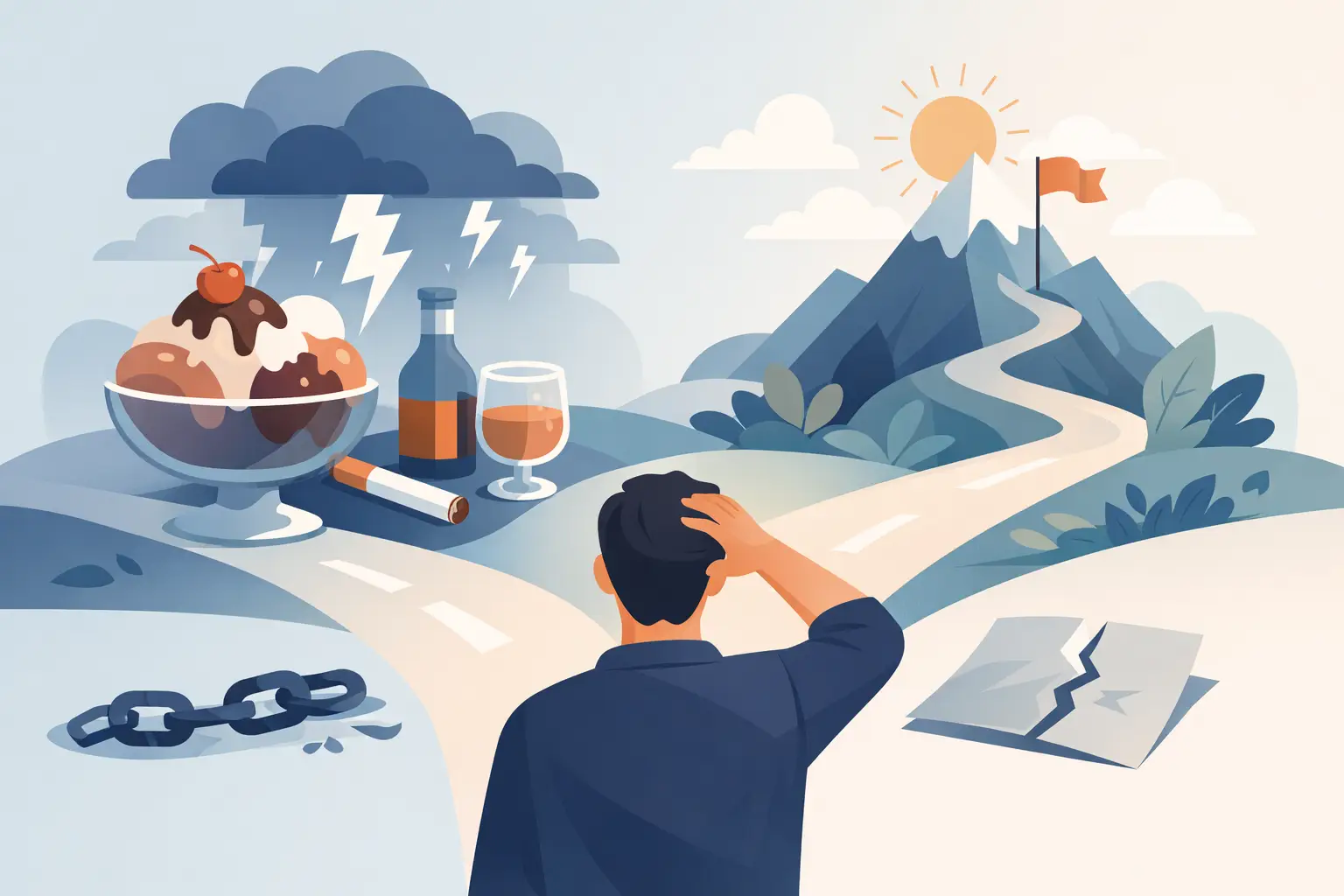
That cigarette craving after coffee, during a rough drive home, or while having a drink can feel like it came out of nowhere. It did not. It came from a routine your brain has repeated hundreds or thousands of times. Learning how to avoid quitting relapse means preparing for those familiar moments before they put you back in reach of nicotine.
A relapse is not proof that you lack willpower. Nicotine addiction is powerful, and smoking is tied to more than the chemical hit. It is a break from work, something to do with your hands, a reason to step outside, and a familiar way to handle stress. The more control you build around those moments, the less control a craving has over you.
Relapse Usually Starts Before the Cigarette
Most people do not decide in the morning that they want to start smoking again. Relapse often starts with a smaller thought: “Just one won’t matter,” “I need something to calm down,” or “I can quit again next week.” That thought gets stronger when you are tired, stressed, drinking, around smokers, or caught in the same old routine.
The goal is not to pretend you will never want a cigarette. The goal is to recognize the moment for what it is: a craving, not a command. Cravings rise, peak, and pass. Even when they feel urgent, they do not last forever.
Your first job is to stop treating every urge like an emergency. Give yourself a short delay before acting. Tell yourself you will wait 10 minutes, drink water, step outside, take a walk around the block, or text someone who knows you are quitting. That pause creates distance between the feeling and the decision.
Make a Plan for Your Biggest Triggers
Quitting gets harder when you rely on a vague promise to “be stronger.” A better approach is to decide exactly what you will do in the situations that used to lead to smoking. You do not need a perfect plan for every hour of the day. Start with the times when cigarettes were most automatic.
Identify your smoking loops
Think about the last several cigarettes you smoked before quitting. What happened right before each one? For many adults, the answer is predictable: morning coffee, a work break, driving, after meals, stressful phone calls, alcohol, or time with friends who smoke.
Write down your top triggers and give each one a replacement action. If coffee is the problem, change where you drink it for a few weeks, hold a different cup, or take it on a short walk. If driving is the problem, keep water, mints, sunflower seeds, or another distraction in the car. If work breaks are the problem, still take the break. Just change the routine around it.
Do not make the mistake of removing every break, comfort, and social ritual from your life. That can make quitting feel like punishment. Keep the pause. Keep the breath. Keep the moment to yourself. Replace the nicotine part.
Plan for alcohol and social pressure
Drinking lowers your guard and puts many former smokers right back into old habits. If alcohol has been tied to cigarettes for you, it may help to take a break from drinking during your first few weeks nicotine-free. If that is not realistic, set rules before you go out: bring your own substitute, leave early if cravings build, and let one trusted person know you are protecting your quit.
You may also need a simple answer for smokers who offer you a cigarette. Try: “No thanks, I quit nicotine,” or “I’m not smoking tobacco anymore.” You do not owe anyone a long explanation. A clear answer is easier to repeat when you are under pressure.
Keep the Ritual Without Going Back to Nicotine
For many smokers, gum, patches, and pills can help with nicotine withdrawal but do not address the physical ritual of smoking. Your hands still feel empty. Your work break still feels different. Coffee may not feel complete. That missing ritual is where many quit attempts get tested.
A nicotine-free, tobacco-free herbal cigarette can be a practical behavioral substitute for adults who miss the familiar act of smoking. It can give you something to hold, a reason to step outside, and a familiar rhythm during the situations that used to trigger a tobacco cigarette. Smoke Free USA offers cocoa-bean-based herbal cigarettes in regular, menthol, cherry, and vanilla options for this exact reason: to help adults separate the ritual from nicotine dependence.
That said, a smokeable substitute is not the right answer for everyone. Inhaling any smoke can irritate the lungs, and nicotine-free cigarettes are not risk-free simply because they contain no nicotine or tobacco. The best choice depends on what drives your cravings, your health history, and what has or has not worked during past quit attempts. If you have breathing concerns, heart issues, are pregnant, or take medications for quitting, speak with a healthcare professional about the approach that fits you.
The key is to use your replacement deliberately. Do not wait until you are already halfway to buying a pack of tobacco cigarettes. Keep your chosen tools available before a trigger hits. Control is easier when the alternative is already within reach.
How to Avoid Quitting Relapse When a Craving Hits
When a strong craving shows up, do not negotiate with it for an hour. Use a simple response you can repeat every time: delay, distract, and decide again after the wave passes.
First, delay the decision for 10 minutes. Next, change your physical setting. Get out of the car, leave the patio where people are smoking, take a shower, walk the dog, or move to a different room. Then give your mouth and hands something else to do. Sip cold water, chew gum, use a straw, hold a pen, or use a nicotine-free smoking alternative if that ritual is your hardest obstacle.
Stress cravings need a different kind of honesty. A cigarette may feel calming because it temporarily ends nicotine withdrawal, but it does not solve the stressful situation. Ask what you actually need: five quiet minutes, food, sleep, help with a problem, or a chance to vent. Meet that need directly when you can.
It also helps to keep a short reminder on your phone. Write down why you quit in your own words: your breathing, your money, your family, your freedom from nicotine, or simply being tired of feeling controlled by the next cigarette. Read it when your mind starts selling you the idea that one cigarette is harmless.
If You Slip, Stop It From Becoming a Return
One cigarette is a slip. Going back to daily nicotine use is a relapse. The difference is what you do next.
If you smoke, do not turn it into an excuse to buy another pack. Do not tell yourself the quit is ruined. Throw away the remaining cigarettes, remove yourself from the trigger, and ask one useful question: what made that moment hard? Maybe you were drinking, skipped a meal, spent time with smokers, or had no substitute with you. That is not a reason to give up. It is information for your next plan.
Avoiding shame matters. Shame makes people hide the slip, feel defeated, and return to the habit because they think they have already failed. Instead, restart immediately. The next cigarette does not have to happen. Every nicotine-free choice after a slip is still a win for your body and your control.
Protect Your Quit on the Hard Days
Some days will be harder than others, especially during the first weeks. Lack of sleep, conflict, celebrations, travel, and stressful workdays can all make old routines feel more attractive. Build extra support around those days instead of acting surprised by them.
Tell someone when you are having a rough day. Keep tobacco cigarettes out of your home, car, and usual hiding places. Carry the tools that help you most. If withdrawal feels overwhelming or you have struggled through several quit attempts, consider support from a healthcare professional or a structured quit program alongside your own routine plan.
You are not trying to prove that quitting is easy. You are building proof that a craving can show up, your old routine can call your name, and you can still choose something different. That is how nicotine loses its hold, one protected moment at a time.