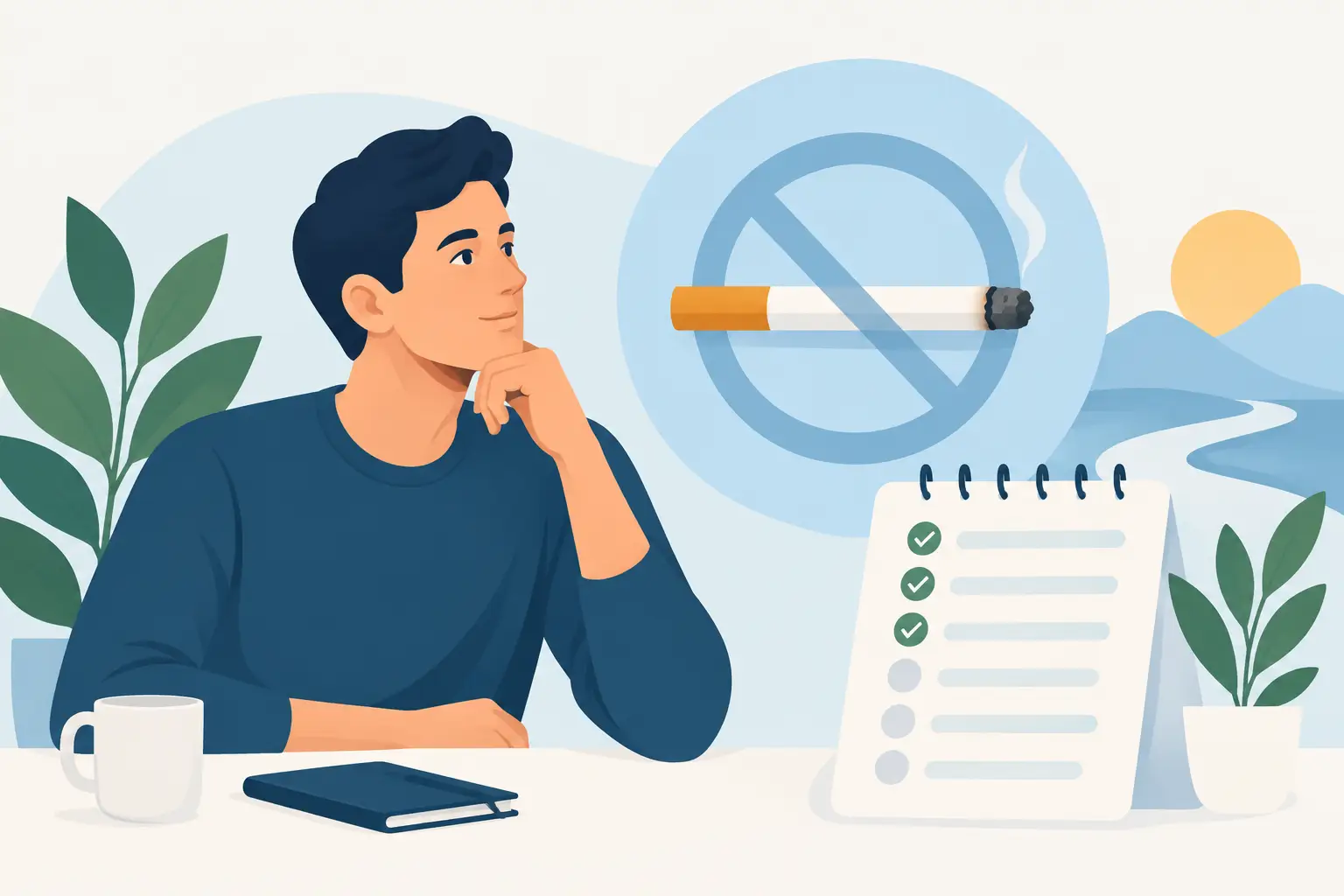
That cigarette after coffee may feel automatic, but it is rarely random. The same goes for the one in the car, on a work break, after dinner, or when a stressful text hits your phone. This cigarette cue tracking guide helps you identify the moments that pull you toward smoking so you can prepare a better response before the craving takes over.
Nicotine addiction is real, and quitting can feel like fighting on two fronts. There is the chemical pull of nicotine, but there is also the ritual: stepping outside, holding a cigarette, taking a pause, and having something to do with your hands. Tracking your cues gives you a clear picture of what you are up against. Once you can see the pattern, you can start changing it.
What Is a Cigarette Cue?
A cigarette cue is anything that signals your brain that it is time to smoke. It can be a place, a time of day, a feeling, a person, a drink, or a familiar routine. For many long-term smokers, the cue arrives before a conscious decision. You pour coffee, get in the driver’s seat, or finish a meal, and your hand reaches for a pack.
That does not mean you lack willpower. It means your brain has learned an association through repetition. Smoking may have become connected to relief, reward, focus, social time, or simply a few minutes alone. A cue tracker separates the situation from the cigarette itself. That distinction matters because you may still want the break, the calm, or the hand-to-mouth motion even when you are ready to leave nicotine behind.
How to Use This Cigarette Cue Tracking Guide
For three to seven days, write down every time you smoke or strongly want to smoke. Do not try to make the log perfect. A note on your phone works. A small notebook works. The point is to catch the details while they are fresh, not to create more pressure.
For each cigarette or craving, record these five things:
- The time and place
- What you were doing right before it hit
- Who you were with, if anyone
- Your mood or physical feeling
- How strong the urge felt on a scale of 1 to 10
Also write whether you smoked right away, delayed it, or used something else. This last detail is powerful. It shows you that a craving is an event you can respond to, not an order you have to follow.
Here is a simple example: 8:10 a.m., parked outside work, alone, drinking coffee, urge level 8. Smoked because the drive and coffee always end this way. The solution is not necessarily giving up coffee forever. It is deciding what will replace that specific cigarette before you start the drive tomorrow.
Look for the Patterns That Cost You Most
After a few days, read your notes and circle the cues that repeat. Most smokers find a handful of high-pressure moments rather than dozens of equally difficult ones. Your morning coffee may be a 9 out of 10 urge, while an afternoon smoke may be mostly boredom and only a 4.
Start with the high-frequency, high-intensity cues. If you smoke every time you drive, that routine deserves a plan. If you only smoke when you drink alcohol with certain friends, you may need a different plan for social situations than you do for weekday mornings.
Pay attention to what the cigarette is doing for you in each moment. A work-break cigarette may provide permission to stop working. A stress cigarette may give you slow breathing and a few quiet minutes. A social cigarette may keep your hands busy and give you a reason to step outside with others. The need is real. The nicotine does not have to be part of the answer.
Build a Replacement Plan Before the Craving Hits
A vague promise to “smoke less” has to compete with years of routine. A specific plan has a much better chance. Match a replacement to the cue instead of using one response for every situation.
For a coffee cue, change one part of the routine. Sit in a different chair, take your coffee outside without your usual pack, or keep a nicotine-free cigarette ready for the moment you would normally light up. For a driving cue, clear cigarettes and lighters from the car, prepare a playlist or podcast, and decide what you will reach for at red lights.
Stress cues need a response that gives your body a pause. Try stepping outside for five minutes, drinking cold water slowly, or taking ten deliberate breaths before deciding what to do next. You do not need to pretend stress is gone. You are creating space between the feeling and the nicotine habit.
For smokers who miss the physical ritual most, a tobacco-free, nicotine-free herbal cigarette can be a practical behavioral substitute. Smoke Free USA offers adult smokers a familiar cigarette format made without nicotine or tobacco, helping preserve the hand-to-mouth routine during trigger-heavy moments. Some people use a nicotine-free option on its own, while others use it alongside a nicotine-replacement plan recommended by a healthcare professional.
There is a trade-off worth saying clearly: smoking any material creates smoke and is not risk-free. Nicotine-free herbal cigarettes are not a harmless wellness product. Their value for some adults is removing nicotine and tobacco while they work on the behavioral side of quitting. If your goal is to stop smoking entirely, use the substitute as a bridge with a plan to reduce the ritual over time.
Test Your Plan in Real Life
Your tracker is not a test you pass or fail. It is a tool for experimenting. Choose one or two cues to target this week, then write an if-then response for each one.
For example: “If I finish lunch and want a cigarette, then I will walk around the block first.” Or: “If I have a drink with friends, then I will bring my nicotine-free alternative and tell myself I do not need nicotine to stay social.” Keep the response realistic. A plan that fits your actual life beats an ambitious plan you will not use.
When an urge arrives, try delaying your response for ten minutes. Cravings rise, peak, and fade. They can feel urgent, but they do not last forever. During that ten-minute window, look at your tracker and name the cue: “This is my after-work stress cue.” That small act makes the craving more specific and less powerful.
If you smoke anyway, write it down without attacking yourself. Ask what happened. Did you forget to prepare? Was the urge stronger than expected? Were you hungry, tired, drinking, or around someone who offered you a cigarette? Every answer helps you adjust the next plan.
Make Your Environment Work for You
Cue tracking gets stronger when your surroundings support the change. Keep cigarettes, ashtrays, and lighters out of sight if possible. Do not leave a pack in the car “just in case.” The easier nicotine is to grab, the less time you have to choose a different action.
At the same time, prepare your replacement tools where the cues happen. Keep water by your desk. Put gum or mints in the car. Have your nicotine-free alternative available for the specific moments when the cigarette ritual is hardest to break. Preparation is not weakness. It is how you take control before the old habit gets its opening.
Tell one person what you are tracking, especially if social smoking is a major trigger. You do not need a lecture or someone policing you. You need support that respects the fight you are in. A simple “I am working on my after-dinner cigarette” can make that moment feel less automatic.
Keep Tracking Until the Cues Lose Their Grip
You may notice progress quickly, or you may need several rounds of adjustment. It depends on how long you have smoked, how much nicotine you use, and which routines are tied most tightly to cigarettes. A difficult day does not erase the days you made a different choice.
Keep your tracker focused on evidence. Notice the first drive you complete without smoking. Notice when a craving drops from an 8 to a 5 because you delayed it. Notice the cue that no longer feels as powerful as it did a week ago. Those are real wins, and they prove that habits can change one moment at a time.
The next time your routine tells you to light up, do not just fight the urge blind. Name the cue, use your plan, and give yourself the chance to choose something different.