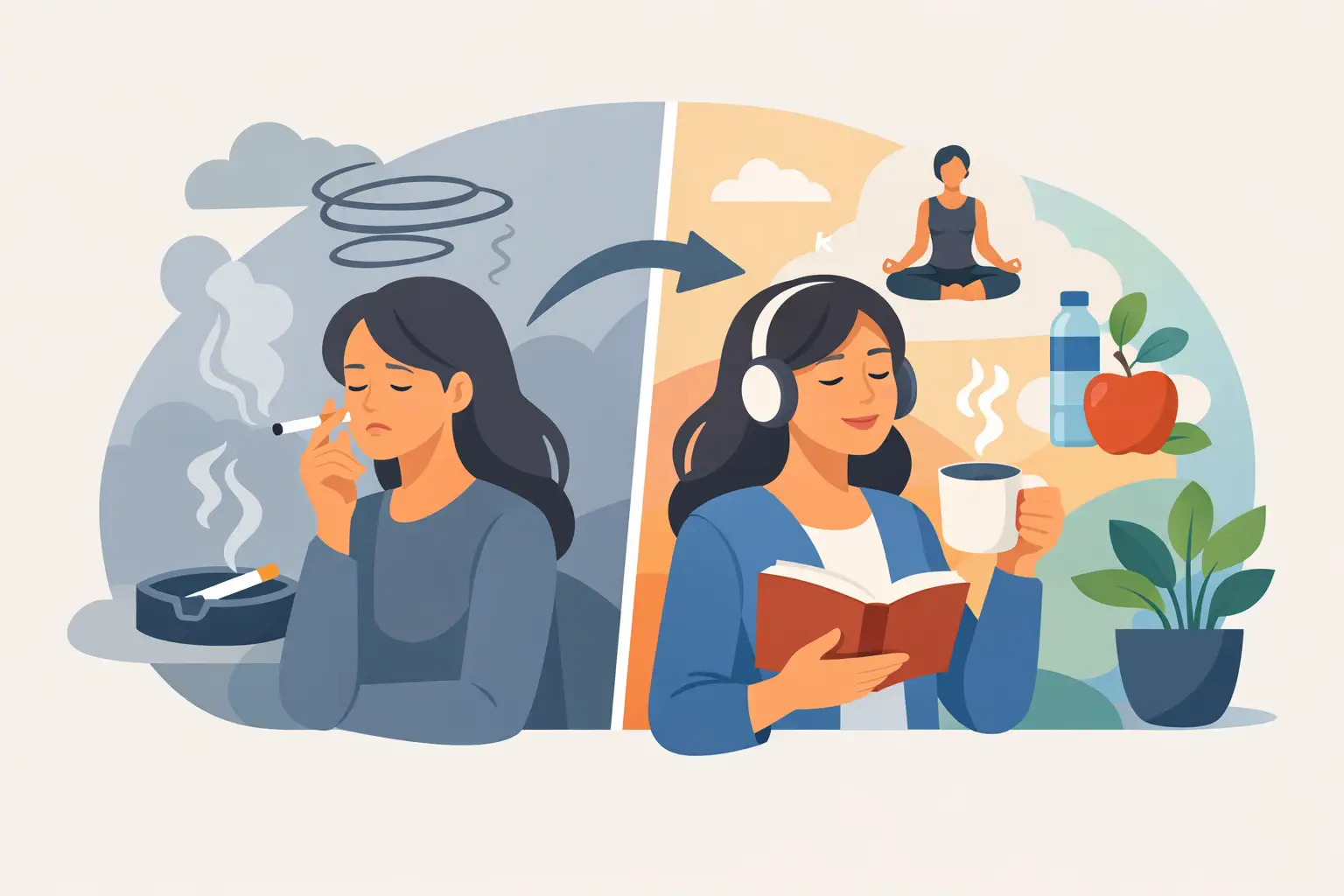
That cigarette after a rough call, a long commute, or an argument can feel less like a choice and more like a reflex. A stress smoking replacement without nicotine gives you a way to interrupt that reflex without feeding the nicotine dependence behind it. You still have a moment to step outside, slow down, and reset – but nicotine no longer gets to call the shots.
For many adult smokers, stress is not the only reason they smoke. It is the reason the habit feels impossible to leave behind. Nicotine creates the craving, but the ritual becomes attached to the moments when you want relief, space, or a few minutes to yourself. That is why gum, patches, and pills can help some people yet still leave others feeling like something is missing.
Why Stress Makes Smoking Feel Necessary
When stress hits, the brain looks for the fastest familiar response. If you have smoked through deadlines, family problems, traffic, work breaks, or difficult conversations for years, smoking has become part of your stress script. You light up, inhale, exhale, and take a pause. The routine is deeply practiced.
Nicotine complicates that routine. It can briefly change how you feel, but it also keeps the cycle going by creating withdrawal and stronger cravings between cigarettes. What feels like stress relief may sometimes be relief from the discomfort nicotine dependence creates. That does not mean stress is not real. It means nicotine has trained itself into your response to it.
Breaking that pattern requires more than telling yourself to stop. You need a plan for the exact moments when your hand reaches for a pack automatically.
What a Stress Smoking Replacement Without Nicotine Can Do
A nicotine-free smoking substitute is built for the behavioral side of quitting. It can preserve familiar actions: holding a cigarette, stepping away from the situation, taking a slow inhale and exhale, and giving yourself a defined break. For smokers who miss the ritual as much as the nicotine, that familiarity can make a hard moment feel more manageable.
This approach is not about pretending that stress disappears. It is about separating stress from nicotine. Instead of reinforcing the thought, “I need nicotine to get through this,” you practice a new response: “I need a pause, and I can take one without nicotine.” That distinction is where control starts to come back.
Smoke Free USA offers tobacco-free, nicotine-free herbal cigarettes made with the tender outer layer of cocoa beans. The cocoa bean layer is ground and toasted for a mild flavor and pleasant aroma, giving adult smokers a familiar cigarette-style alternative without tobacco or nicotine. Regular, menthol, cherry, and vanilla options let you choose a flavor that fits the moment you are trying to replace.
Match the Replacement to Your Real Triggers
A replacement only helps if it is ready when your trigger shows up. Stress smoking rarely happens at random. Most smokers have repeat situations that bring on the urge, often at the same time and in the same place every day.
The work-break cigarette
For some people, the cigarette is permission to leave the desk. If that is your pattern, keep your nicotine-free alternative where you normally keep your cigarettes. When the pressure builds, take the break anyway. Walk outside, stand away from the noise, and give yourself five minutes. The goal is not to power through stress without stopping. The goal is to stop without nicotine.
The drive-home cigarette
A commute can carry the entire day with it. The car becomes the place where you decompress, replay conversations, or brace for what is waiting at home. Prepare before you start the engine. Have your replacement within reach, and pair it with a small change such as a different playlist, a cold drink, or five slow breaths at a red light. You are building a new end-of-day cue.
The coffee, cocktail, or after-meal cigarette
These triggers are powerful because they are connected to pleasure as well as stress. You may not want to give up coffee or avoid every social event while you quit. A nicotine-free herbal cigarette can help you keep the familiar smoking moment while removing nicotine from the equation. That makes it easier to practice being around old cues without automatically returning to conventional cigarettes.
The sudden emotional urge
Arguments, bad news, loneliness, and frustration can create an intense urge to smoke immediately. In that moment, do not demand a perfect response from yourself. Reach for your replacement, change locations if you can, and focus on getting through the next ten minutes. Cravings rise, peak, and pass. You do not have to solve the entire day while you are in the middle of one.
Use the Ritual to Build a New Response
The key is to make your nicotine-free replacement intentional rather than automatic. Before using it, name what is happening: “I am stressed,” “I am angry,” or “I want a break.” That simple pause helps you recognize the trigger instead of letting it run the routine.
Then give the break a job. Let it be time to breathe slowly, walk around the block, drink water, or decide what you will do next. You are not just replacing a cigarette. You are teaching your brain that a pause can exist without nicotine.
Some smokers prefer to use a nicotine-free cigarette only during their strongest trigger moments, such as after meals or during stressful work breaks. Others use it more often at the beginning because the physical ritual is what they miss most. It depends on your routine and what has caused past quit attempts to fall apart. Start with the situations where you are most likely to reach for a conventional cigarette, then adjust as your confidence grows.
Be Honest About the Trade-Offs
A nicotine-free herbal cigarette removes nicotine and tobacco, but smoking anything still involves inhaling smoke. It is not a health product, and it is not a risk-free habit. The practical value is that it can be a stepping stone for adults trying to break nicotine dependence while dealing with the ritual and trigger side of smoking.
It also may not be the right fit for everyone. If you do not want to continue any smoking behavior, a non-smoked strategy may better match your goal. If nicotine cravings are severe, some adults choose to pair behavioral support with conventional nicotine-replacement options or speak with a healthcare professional about a quit plan. There is no prize for making quitting harder than it needs to be.
What matters is choosing a strategy that addresses the reason you smoke when stress hits. If your biggest battle is nicotine withdrawal, focus on that. If your biggest battle is the coffee break, the drive, the hand-to-mouth habit, or the need to step away for a minute, make sure your plan covers that too.
Keep Conventional Cigarettes Out of Reach
Stress makes convenience dangerous. If conventional cigarettes are sitting in your car, desk drawer, jacket pocket, or kitchen cabinet, a difficult moment can turn into a quick relapse before you have time to think. Make the better choice easier to reach.
Keep your nicotine-free option in the places where your smoking routine usually happens. Consider getting rid of ashtrays connected to your old habit, changing your break route, or telling one supportive person what you are working on. These are small changes, but small changes matter when an urge only lasts a few minutes.
You can also measure progress in a way that feels real. Notice the first stressful call you handle without nicotine. Notice the first Friday night, the first traffic jam, or the first coffee break where you choose a different response. Those moments prove that stress may still show up, but nicotine does not have to be part of the answer.
The next time pressure makes you want to light up, do not tell yourself you have to be tougher than the craving. Give yourself a replacement, take your break, and keep moving forward – one nicotine-free stress moment at a time.