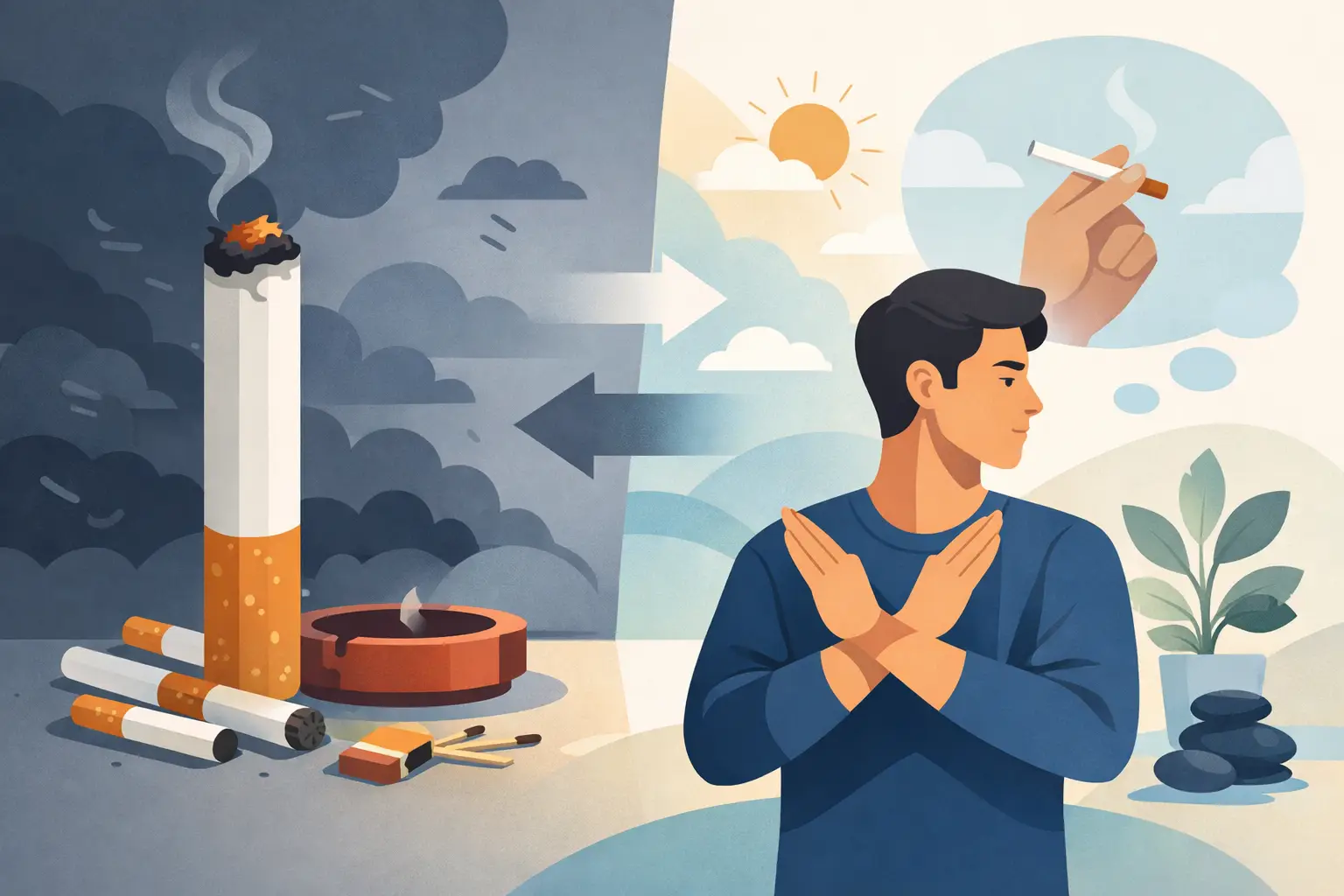
A cigarette urge can feel like an order: light up now, deal with everything else later. But an urge is not a command. If you want to reduce cigarette urges, the goal is not to pretend cravings are easy. It is to have a real response ready before your usual coffee break, drive home, stressful call, or night out puts nicotine back in charge.
For many adult smokers, the hardest part of quitting is not only the nicotine. It is the reach for a pack, the pause outside, the hand-to-mouth motion, the inhale, and the few familiar minutes that seem to separate one part of the day from the next. When you address both the chemical craving and the ritual, you give yourself more control.
Why Cigarette Urges Feel So Strong
Nicotine trains the brain to expect a quick reward. Over time, everyday moments become signals: coffee means cigarette, finishing a meal means cigarette, traffic means cigarette, stress means cigarette. The trigger can arrive before you even consciously think about smoking.
That is why willpower alone can feel like a losing plan. You may genuinely want to quit and still feel pulled toward a cigarette at the exact times you have smoked for years. This does not mean you have failed. It means the habit has been rehearsed often.
Cravings also come in waves. A strong urge usually rises, peaks, and passes rather than growing forever. The key is creating enough space between the urge and your response. Even a few minutes can break the automatic pattern.
Build a Plan to Reduce Cigarette Urges
Do not wait until a craving hits to decide what you will do. Make the decision while you are calm, then repeat it when the moment arrives. Start by noticing your most predictable smoking times for several days. You may find that your urges are less random than they seem.
Morning coffee, work breaks, driving, alcohol, boredom, arguments, and after-meal downtime are common trigger points. Write down the situations that get you reaching for cigarettes, along with what you are feeling at the time. Sometimes the real driver is frustration, fatigue, loneliness, or simply the need for a break.
Then give each trigger a replacement action. If coffee is your signal, change where you drink it, hold the cup with both hands, or step outside for a short walk instead of stepping out to smoke. If driving is difficult, keep water, mints, or a planned distraction within reach. If stress is the trigger, take a two-minute pause before deciding what happens next.
A plan works best when it is specific. “I will smoke less” is a hope. “After lunch, I will walk around the block and wait 10 minutes before I decide” is a move you can actually make.
Use the Delay, Distract, Decide Method
When an urge arrives, delay your response. Tell yourself you will wait 10 minutes. During that time, do something that changes your physical state: drink cold water, brush your teeth, take a brisk walk, shower, stretch, call someone, or handle a task you have been putting off.
You are not trying to solve your whole quit journey in those 10 minutes. You are getting through one wave. When the time is up, decide again. Many urges lose their edge once you have interrupted the routine.
If 10 minutes feels impossible at first, start with three. Every time you delay, you prove that the craving does not own the next decision.
Keep the Smoking Ritual From Pulling You Back
Nicotine replacement can help some people manage withdrawal, but patches, gum, and medication do not always answer the ritual problem. They do not necessarily replace the familiar feel of taking a cigarette break, holding something in your hand, or stepping away from a stressful moment.
That is where a nicotine-free, tobacco-free herbal cigarette may fit into a quit plan for some adult smokers. It can provide a familiar smoking moment without putting nicotine back into the cycle. Smoke Free USA offers cocoa-bean herbal cigarettes in regular, menthol, cherry, and vanilla varieties for adults who want a tangible substitute during trigger-heavy moments.
This approach is not about making smoking harmless. Inhaling smoke of any kind can irritate the lungs and carries health risks. But for an adult smoker focused on breaking nicotine dependence, separating the ritual from nicotine can be a practical step. It may be especially useful when the urge is more about habit than a need for nicotine itself.
It depends on your triggers. Some people may use a nicotine-free substitute only during their toughest routines, such as after dinner or while socializing. Others may pair it with a patch or another clinician-recommended nicotine-replacement method while they work through the behavioral side of quitting. The best approach is the one that helps you avoid returning to tobacco cigarettes.
Change the Moments That Usually Lead to Smoking
You do not have to redesign your entire life on day one. Change the routines that have the strongest connection to cigarettes first.
If you always smoke with coffee, switch to tea for a week or drink your coffee in a different place. If you smoke after meals, stand up as soon as you are done and do something active. If your work break is built around cigarettes, take the break anyway. You still deserve a pause. Just give the pause a new purpose.
Alcohol deserves extra attention because it lowers inhibition and often connects directly to social smoking. If you are early in a quit attempt, consider skipping alcohol for a while or setting a clear limit before you go out. Bring a plan for what you will do when others light up. Leaving a situation early is not weakness. It is protecting the progress you are building.
Stress is another major trigger, but cigarettes do not actually fix the source of stress. They temporarily relieve nicotine withdrawal, which can make smoking feel calming. Try replacing that loop with a fast reset: breathe slowly for one minute, step outside, put on a song, write down the next task, or message someone who supports your goal. Small resets can keep a difficult moment from becoming a cigarette.
Make Slips Useful, Not Final
A slip can happen. One cigarette does not erase every cigarette you did not smoke. The danger is the thought that says, “I already messed up, so I might as well keep going.” That thought turns one moment into a return to the old pattern.
Instead, get specific. What was happening right before you smoked? Were you hungry, drinking, angry, tired, around other smokers, or caught without your planned substitute? Use the answer to strengthen your next plan.
There is a difference between being hard on yourself and being honest with yourself. Shame rarely helps you quit. A clear adjustment can. Refill your supplies, avoid the trigger that caught you off guard, and decide what you will do differently the next time that situation comes up.
Get Support That Matches Your Goal
Quitting is personal, but you do not have to do it alone. Tell one person what you are working on and what kind of support actually helps. You may want encouragement, a distraction during cravings, or simply someone who will not offer you a cigarette.
If withdrawal feels overwhelming, a doctor, pharmacist, or smoking-cessation counselor can help you consider medications and nicotine-replacement options. If you are pregnant, have a heart or lung condition, or have concerns about any smoking or cessation product, get medical advice before choosing your approach.
The next urge will come, but it does not have to decide your next move. Keep your plan close, protect your trigger moments, and take the win one craving at a time.