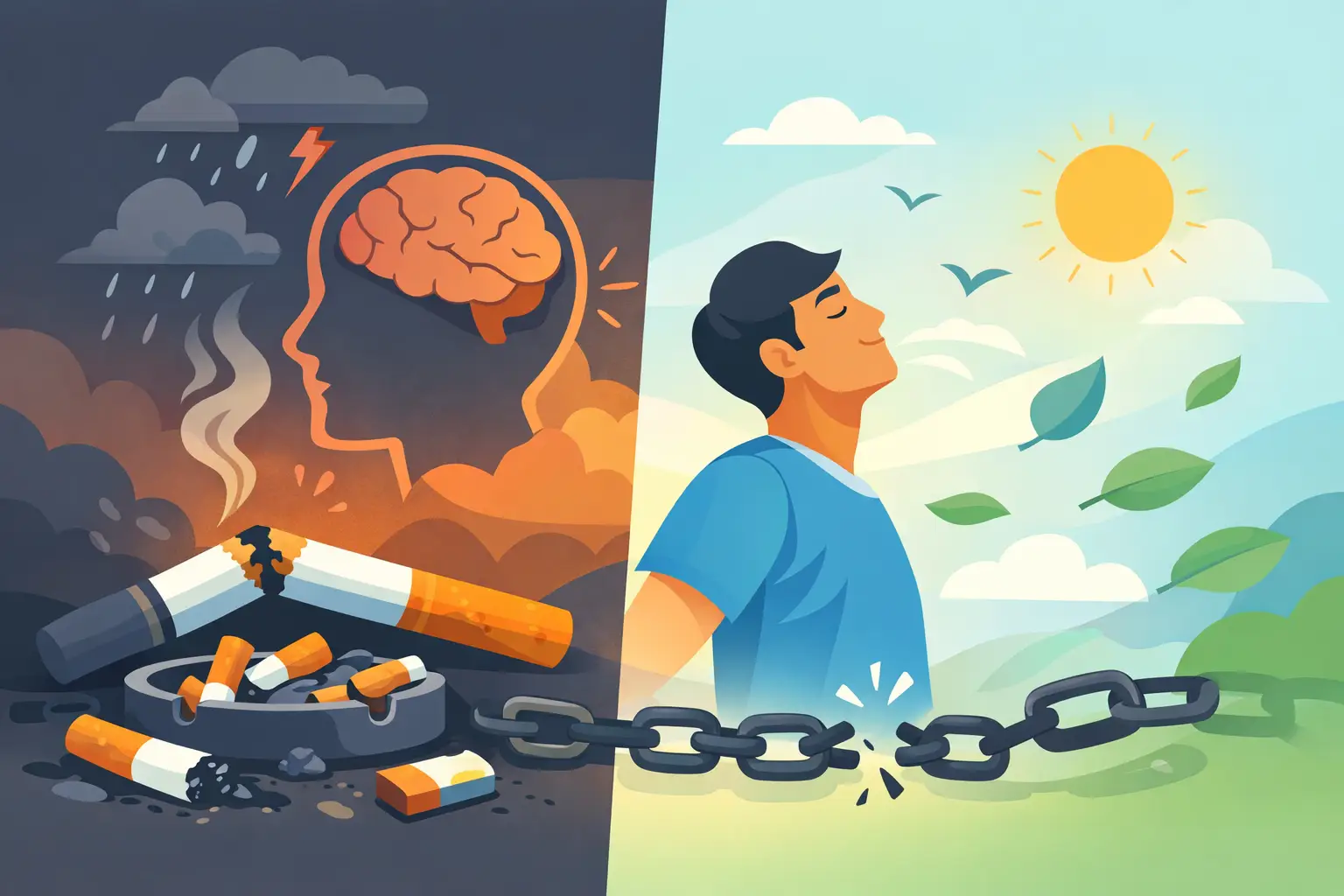
That cigarette you automatically reach for with coffee, in the car, after a meal, or during a stressful work break is doing more than filling a few minutes. When you stop supplying nicotine, your body and brain notice. Nicotine withdrawal is the adjustment period that follows, and it can make even the most determined quit attempt feel personal, frustrating, and hard.
The good news is that withdrawal is temporary. A craving can be intense, but it is not a command. Knowing what is happening, when it is likely to hit, and what to do with your hands and routine can give you more control when the urge shows up.
What Nicotine Withdrawal Feels Like
Nicotine changes how your brain expects to receive stimulation and relief. When nicotine is removed, your brain has to recalibrate. That can show up as irritability, restlessness, anxiety, trouble concentrating, low mood, increased appetite, and powerful cigarette cravings.
For some people, the hardest part is physical. They may feel tense, restless, tired, or unable to focus on simple tasks. For others, the bigger fight is situational. They feel fine until they pour their first cup of coffee, step outside on a work break, get behind the wheel, or meet friends for a drink. Suddenly, the old routine feels incomplete.
That does not mean you are failing. It means smoking was connected to more than nicotine. It was also a pause button, a hand-to-mouth habit, a familiar inhale and exhale, and a dependable part of certain moments in your day.
How Long Does Nicotine Withdrawal Last?
There is no identical timeline for every adult smoker. How long you have smoked, how often you smoke, your stress level, and whether you are using nicotine replacement can all affect the experience.
Many people notice symptoms within a few hours of their last cigarette. Cravings and irritability often become strongest during the first few days, when your body is adjusting to the sudden absence of nicotine. Physical withdrawal symptoms commonly begin to ease over the following weeks.
But the urge to smoke can return well after the physical symptoms settle. That is usually because of triggers, not because your body needs a cigarette. A long drive, an argument, a beer, a familiar smoking spot, or the smell of tobacco can bring back the thought of smoking fast. These moments can be surprising, but they are predictable enough to plan for.
Think of quitting in two parts: breaking nicotine dependence and changing the routine that kept the dependence in place. Both matter. A plan that only addresses one can leave you exposed when the other shows up.
The First Week Is About Getting Through the Triggers
You do not have to solve every future craving on day one. Your job is to get through the next one without returning to nicotine. Cravings rise, peak, and fade. They can feel endless in the moment, but most pass within minutes.
Start by identifying your high-risk times. If you always smoked with coffee, do not let that moment catch you off guard. Change where you drink it, take it on a short walk, hold something different, or give yourself a replacement that keeps the moment from feeling empty. The same approach works for driving, breaks, after meals, and stressful evenings.
It also helps to make your choice easy when a craving hits. Remove cigarettes, lighters, ashtrays, and anything else that makes a relapse automatic. Tell one person you trust that you are quitting. You do not need a lecture or pressure. You need someone who understands that a rough afternoon does not erase your progress.
A few practical moves can help when the urge is loud:
- Drink cold water slowly and give your hands something to do.
- Take a short walk, climb stairs, or change rooms for five minutes.
- Brush your teeth after meals if that is a common smoking trigger.
- Use slow breathing: inhale gently, pause, then exhale longer than you inhaled.
- Keep a nicotine-free substitute available for the routines you know will be difficult.
The point is not to distract yourself forever. It is to create enough space for the craving to pass without feeding it nicotine.
Why the Smoking Ritual Can Be Harder Than Expected
Many adults try gum, patches, or medication and still find themselves missing cigarettes. That is not a lack of willpower. These options may help address nicotine cravings, but they do not necessarily replace the physical routine of smoking.
A cigarette involves a sequence: stepping away, holding it, lighting it, inhaling, exhaling, and taking a few quiet minutes. Over years of smoking, that sequence can become attached to relief, reward, focus, and social connection. Remove it overnight and the empty space can feel enormous.
This is where a behavioral substitute may make sense for some adult smokers. Nicotine-free, tobacco-free herbal cigarettes can preserve a familiar smoking moment without continuing nicotine exposure. Smoke Free USA products use toasted cocoa bean outer layer for a mild flavor and aroma, offered in regular, menthol, cherry, and vanilla varieties.
They are not a magic fix, and they are not risk-free simply because they contain no nicotine or tobacco. Inhaling smoke of any kind can irritate the lungs and carries health concerns. But for adults who are trying to BREAK the nicotine addiction and repeatedly struggle with the ritual side of smoking, a nicotine-free alternative can be one practical tool to use during trigger-heavy moments.
Some people use a behavioral substitute on its own. Others pair one with a nicotine-replacement plan recommended by a healthcare professional. What works depends on your smoking history, your health, and the situations that most often pull you back toward cigarettes.
Build a Plan for Cravings Before They Arrive
A quit plan works better when it is specific. “I will quit smoking” is a strong decision. “When I finish dinner, I will immediately clear the table, brush my teeth, and sit somewhere I do not usually smoke” is a usable plan.
Write down your three biggest triggers and decide what you will do instead. Keep the answer simple enough to follow when you are tired or irritated. If work breaks are tough, take your break somewhere different. If alcohol makes cigarettes feel unavoidable, consider skipping drinks for the first few weeks or setting a firm plan before you go out. If stress is the trigger, build a two-minute reset that does not involve nicotine.
Do not treat a craving as proof that you need to smoke. Treat it as a signal: this is a familiar moment, and your brain expects the old answer. Then give it a new answer.
If You Slip, Get Back in Control Fast
A slip does not have to become a return to daily smoking. One cigarette can trigger the thought that you have ruined everything, so you might as well keep going. That thought is the trap.
Instead, stop and look at what happened. Were you stressed, drinking, around smokers, or unprepared for a routine you forgot about? Use the information. Throw away the remaining cigarettes, reset your plan, and continue. Progress is not measured by perfection. It is measured by how quickly you choose your goal again.
If withdrawal symptoms feel unmanageable, if anxiety or depression becomes severe, or if you have questions about medications or nicotine replacement, talk with a healthcare professional. Support is not weakness. It is another way to stack the odds in your favor.
Every nicotine-free craving you get through teaches your brain something new: you can have coffee, handle stress, drive home, take a break, and finish a meal without nicotine. Keep protecting those small wins. They are how a new routine starts to feel like yours.