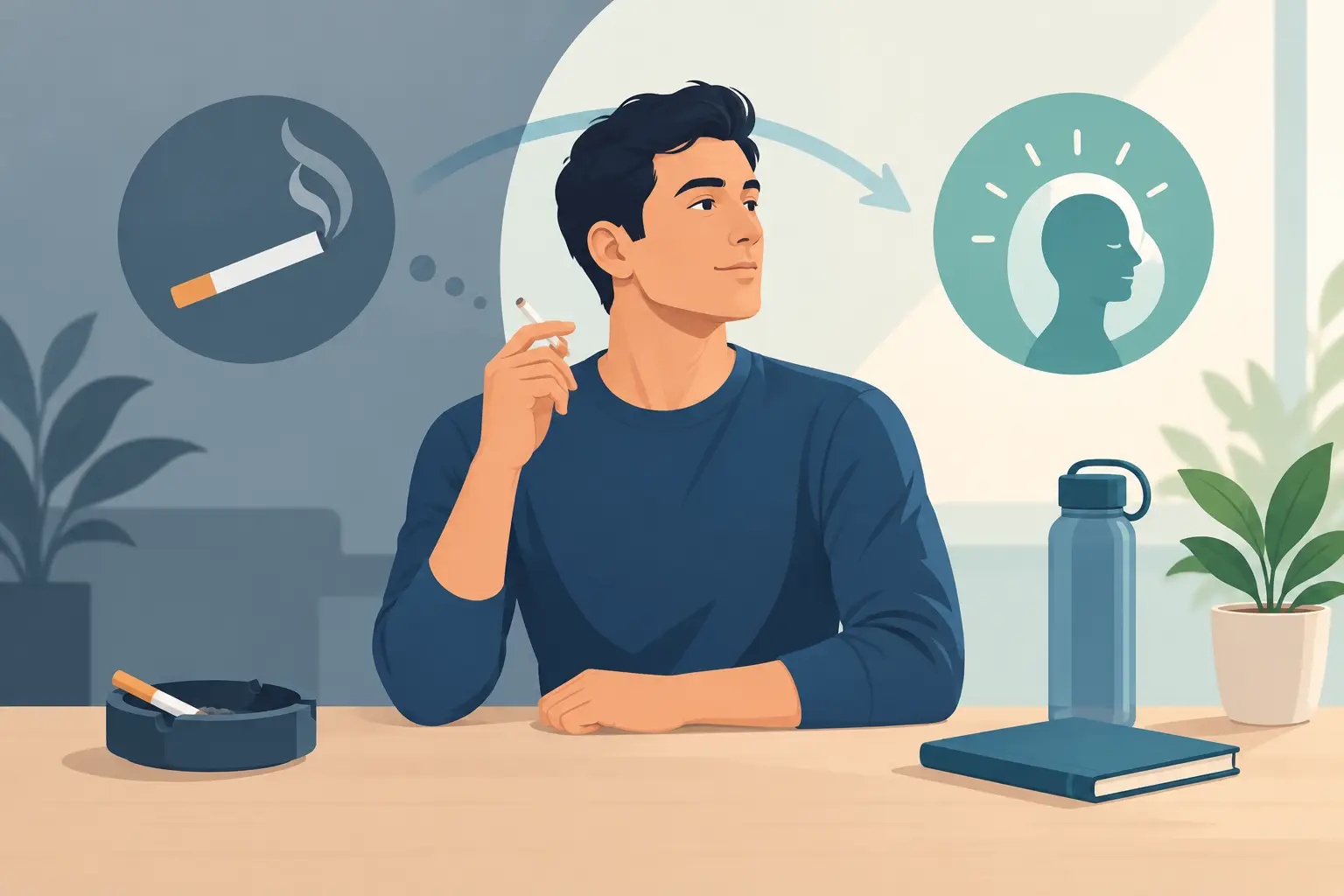
Your first cigarette may arrive before you are fully awake. It might be the one with coffee, the one in the car, or the one that marks the end of a stressful call. Learning how to reduce cigarette rituals starts by recognizing that these moments are not just about nicotine. They are practiced routines your brain expects, and that is why quitting can feel so disruptive.
You do not need to surrender control to every familiar trigger. You can begin separating the ritual of smoking from nicotine dependence, one situation at a time. That gives you a practical way to fight back without pretending cravings, stress, or old habits do not exist.
Why cigarette rituals are so hard to change
A cigarette ritual is the repeated pattern surrounding a cigarette: reaching for the pack, stepping outside, holding it between your fingers, taking a break, inhaling, and exhaling. After enough repetition, a cup of coffee or a drive home can trigger the entire sequence before you have made a conscious choice.
Nicotine strengthens that learning. It teaches your brain to connect relief, focus, and reward with a specific action at a specific time. But the physical routine can stick around even when you are determined to quit nicotine. This is why a patch, gum, or medication may help some people while still leaving them wondering what to do with their hands during a work break or after dinner.
The goal is not perfection on day one. The goal is to make each automatic smoking moment less automatic.
How to reduce cigarette rituals by targeting your triggers
Start with the cigarettes that feel least necessary, not necessarily the ones you smoke most often. For many adults, that is the cigarette smoked out of boredom, while scrolling on a phone, or simply because it is time for a break. Removing one easy ritual builds proof that you can interrupt the pattern.
For two or three days, notice when you smoke and what happens immediately before it. You do not need an elaborate journal. A note on your phone is enough: time, location, feeling, and who you were with. Patterns become obvious quickly.
Common trigger groups include:
- Morning routines, especially coffee, breakfast, and the commute
- Transition moments, such as leaving work, finishing a meal, or getting in the car
- Emotional pressure, including stress, frustration, loneliness, and boredom
- Social settings, particularly drinking, parties, and time with friends who smoke
Once you can name the trigger, you can plan a response before the craving arrives. If the car is a trigger, keep cigarettes out of reach and bring water, mints, or a nicotine-free substitute for the drive. If coffee is the trigger, change where you drink it for a week. Sit on the other side of the room, take it on a short walk, or drink it after breakfast instead of before.
Small changes matter because they break the connection between one cue and one automatic response.
Keep the break, change what happens during it
Many smokers are not only seeking a cigarette. They are seeking permission to pause. A smoke break can mean five quiet minutes away from work, family pressure, screens, or noise. If you erase the break completely, you may feel like quitting has taken something away from you.
Keep the pause. Change the activity inside it.
Step outside if that is what helps you reset. Breathe slowly, stretch your shoulders, walk to the end of the block, or stand somewhere different from your usual smoking spot. The point is to protect the relief you need without reinforcing the exact old routine.
This approach is especially useful at work. Rather than skipping every break because you are trying to be disciplined, schedule a short non-smoking break at the times you normally smoke. You are teaching your brain that relief is still available. Nicotine does not get to own every moment of calm.
Replace the hand-to-mouth routine when you need it most
For some adult smokers, the hardest part is not knowing what to do with their hands, mouth, and breathing pattern. That is not a lack of willpower. It is a behavioral habit built through thousands of repetitions.
A practical replacement can make the transition feel more manageable. Water through a straw, sugar-free gum, a toothpick, or a small object to hold can help in certain settings. But these options may not fully address the sensory routine for someone whose strongest triggers are coffee, cocktails, driving, or a familiar outdoor smoke break.
That is where a nicotine-free, tobacco-free herbal cigarette can be a useful behavioral substitute for some adults. Smoke Free USA offers cigarettes made with the tender outer layer of cocoa beans, ground and toasted for a mild flavor and pleasant aroma, without nicotine or tobacco. Regular, menthol, cherry, and vanilla options give adults a familiar format while they work on removing nicotine from their routine.
This is not about pretending smoking is health-promoting. Inhaling smoke of any kind can carry risks, and the healthiest choice is to avoid smoking altogether. The value of a nicotine-free substitute is that it can help some smokers separate the ritual from the drug that keeps the addiction going. For adults who have struggled with gum, patches, or pills alone, that difference can matter.
Create rules that reduce cigarettes without creating panic
Vague goals often fail under pressure. “I will smoke less” sounds good until a stressful afternoon hits. Clear rules are easier to follow because they remove the need to negotiate with every craving.
Try one rule at a time. You might decide not to smoke in the car, not to smoke before a certain hour, or not to buy a replacement pack until the current one is gone. Another effective rule is to delay each cigarette by 10 minutes. During those 10 minutes, drink water, move your body, or use your planned substitute. Some cravings fade. Others do not, but you still gain control by proving that the urge does not command immediate action.
Be careful not to choose rules so extreme that they trigger an all-or-nothing rebound. If you normally smoke 20 cigarettes a day, trying to eliminate every ritual overnight may work for some people, but it can make others feel defeated after one difficult moment. A gradual plan can be a strong plan when it keeps you moving toward less nicotine, not merely postponing change.
Plan for coffee, alcohol, and stress before they test you
Certain situations deserve their own strategy because they have a powerful connection to smoking. Coffee can be changed by altering the time, location, or companion routine. If you always smoke on the porch with your first cup, drink it indoors for several days or take it to a different chair.
Alcohol lowers inhibition, so decide before going out what you will do when someone offers a cigarette. Bring your own nicotine-free option if that fits your plan, limit the number of drinks, or leave earlier than usual. There is no prize for testing yourself in the hardest environment before you are ready.
Stress needs an honest plan, too. A cigarette may feel like relief, but often it is also a brief pause and a familiar breathing pattern. Build a short response you can use anywhere: walk for five minutes, splash cold water on your face, call someone, breathe slowly, or step outside without lighting up. You are not trying to eliminate stress. You are refusing to let nicotine decide how you handle it.
Get support for the nicotine side of the fight
Ritual change is powerful, but nicotine dependence can be physically demanding. If cravings, withdrawal, anxiety, or repeated relapses are making it hard to move forward, speak with a healthcare professional about evidence-based quit support. Nicotine replacement therapy, prescription treatments, counseling, and quit programs can be useful tools, and some adults use behavioral substitutes alongside them.
There is no single quitting method that works for everyone. What matters is building a plan that addresses both parts of the problem: the chemical pull of nicotine and the daily rituals that make cigarettes feel necessary.
The next cigarette ritual you change does not have to be the hardest one. Pick one moment you are ready to take back, make a plan before it arrives, and follow through. Every routine you interrupt is evidence that nicotine no longer gets to run your day.