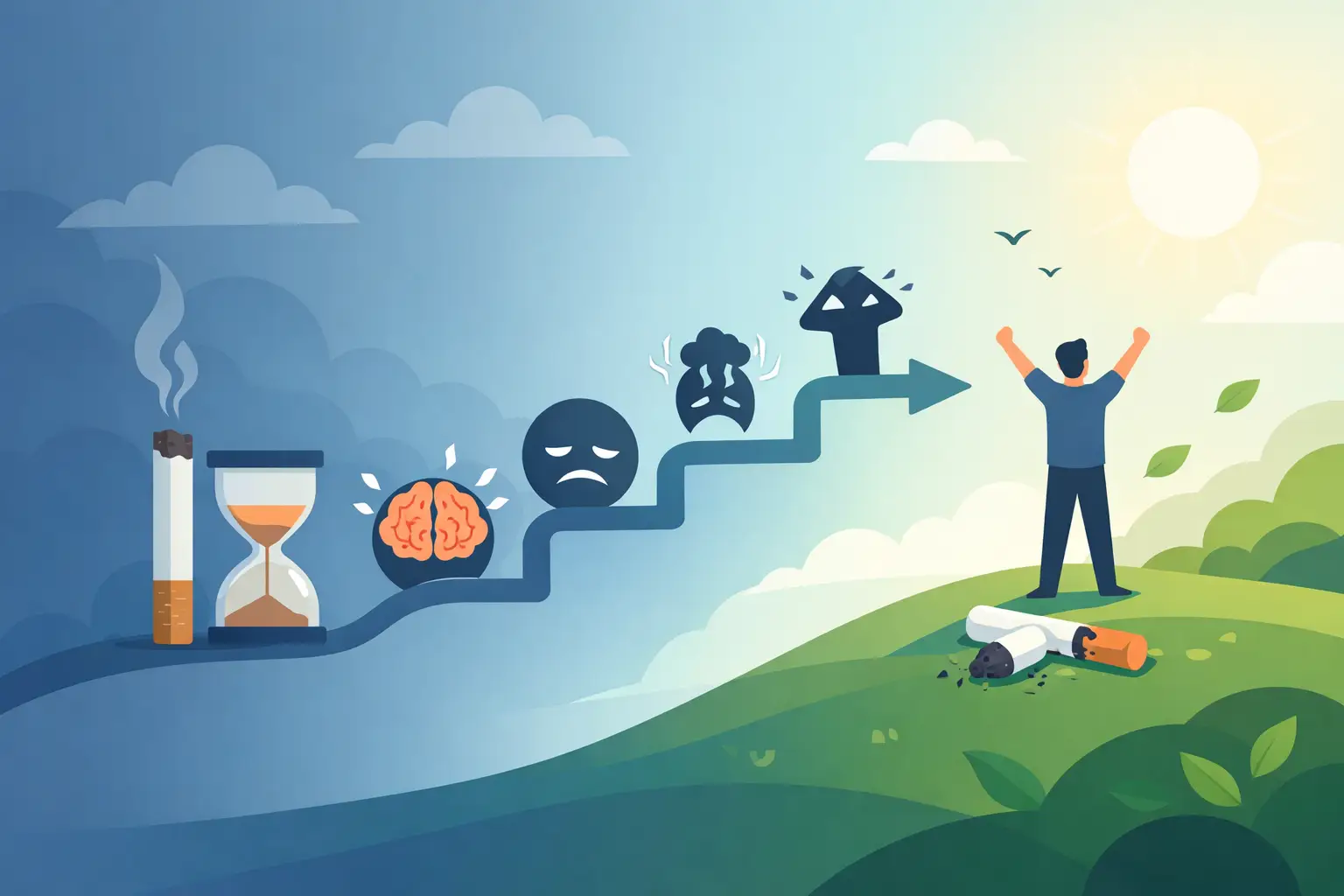
The nicotine craving timeline can feel brutally personal. You may be fine at breakfast, then suddenly want a cigarette so badly during your drive, work break, or evening drink that quitting feels impossible. That surge does not mean you are failing. It means your brain and your daily routines are adjusting to life without nicotine.
Cravings are temporary, even when they feel urgent. Knowing when they are most likely to hit gives you a better chance of meeting each one with a plan instead of a cigarette.
The first 24 hours: Your routine notices first
Within hours of your last cigarette, nicotine levels begin to drop. For some smokers, the first day brings restlessness, irritability, trouble concentrating, or the persistent thought that something is missing. For others, the strongest feeling is not physical at all. It is the empty moment after coffee, after a meal, or when stepping outside for a break.
This is why willpower alone can feel thin. Cigarettes often become attached to dozens of small moments throughout the day. Your hand expects one. Your mouth expects one. Your brain expects the familiar pause.
Keep your response simple during this first day. When a craving hits, change your setting, take a few slow breaths, drink cold water, or take a short walk. If the ritual is your biggest problem, having a nicotine-free, tobacco-free smoking substitute available for your usual trigger moments can help you keep the familiar pause while removing nicotine from it.
Days 2 and 3: The usual peak
For many people, days two and three are the toughest part of the nicotine craving timeline. By this point, nicotine has largely cleared from the body, and withdrawal symptoms can be at their strongest. Cravings may come more often. You may feel tense, impatient, low, hungry, or unable to focus for long.
The key fact to remember is that a craving is a wave, not a command. Most individual cravings rise, peak, and pass within a few minutes, though the next one may show up later. You do not need to solve the rest of your life when one hits. You need a workable response for the next five minutes.
Try using a repeatable script: wait, move, breathe, and replace. Wait until the first intensity drops. Move your body or change rooms. Breathe slowly enough to interrupt the rush. Then replace the action with something that fits the situation, whether that is water, a mint, a walk, or a nicotine-free cigarette for an adult smoker who misses the physical smoking ritual.
Days 4 through 7: Cravings become more predictable
After the first few days, many smokers notice that the chemical pull begins to loosen. That does not mean the week is easy. It means the cravings may become easier to recognize as trigger-based.
A stressful email, a phone call with family, a traffic jam, or a beer with friends can all bring back a sharp urge. The difference is that you can start seeing the pattern: this is not necessarily your body demanding nicotine. This is a learned connection between a moment and a cigarette.
That awareness creates control. Write down the situations that catch you off guard. Maybe it is the 10 a.m. work break. Maybe it is sitting on the porch after dinner. Once you know the trigger, decide in advance what replaces it. A plan made before the craving arrives is stronger than a promise made in the middle of one.
Weeks 2 through 4: Breaking the automatic habit
During the next few weeks, withdrawal symptoms commonly continue to ease. Sleep, mood, and concentration can still be uneven, especially for long-term smokers or people quitting during a stressful period. There is no prize for pretending it is easy. Nicotine dependence is real, and your routine may have been built around cigarettes for years.
This stage is often where people get caught by confidence. They make it through a hard week, then think one cigarette at a party or after a rough day will not matter. For many former smokers, that one cigarette restarts the cycle because it reconnects nicotine with relief.
Protect the progress you have earned. Keep your replacement tools close during the moments that used to be nonnegotiable smoking times. Smoke Free USA nicotine-free, tobacco-free herbal cigarettes are made for adult smokers who want to keep a familiar hand-to-mouth ritual without putting nicotine back into the pattern. They may fit alongside a broader quit plan, including support from a healthcare professional or nicotine-replacement therapy when appropriate.
One to three months: The surprise cravings
By one month, cravings are often less frequent and less intense, but surprise urges can still show up. A familiar smell, a stressful deadline, seeing someone smoke, or returning to an old social setting can bring a sudden flash of desire.
These cravings can be frustrating because they seem to come out of nowhere. In reality, they are often old associations firing up. The good news is that every time you move through one without nicotine, you weaken that association. Your brain learns that coffee, driving, celebrating, and calming down can happen without a nicotine cigarette.
It depends on your smoking history, stress level, and environment, but this is the stage when many people begin to feel more like themselves. Food may taste better. Breathing may feel easier. Most importantly, you begin to trust that an urge can pass without controlling your next decision.
Months later: Staying ready without living on edge
There is no universal finish line for nicotine cravings. Some people rarely think about smoking after a few months. Others get occasional urges for much longer, especially around major stress, alcohol, or old smoking friends. An occasional craving does not erase your progress or mean you are back at day one.
The goal is not to fear every urge. It is to recognize it quickly: “This is a craving. I know what it is. I do not have to act on it.” Keep the habits that helped you quit, particularly during travel, holidays, difficult weeks, and social events where cigarettes used to be part of the routine.
Build a plan for your personal triggers
The timeline matters, but your trigger map matters just as much. If you smoked mostly to manage stress, your plan needs a stress response. If you smoked during social drinking, decide before you go out how you will handle that moment. If your morning cigarette felt inseparable from coffee, change the routine for a while – drink coffee in a different place, take it on a walk, or use a replacement that keeps your hands occupied.
Avoid telling yourself that you should not want a cigarette. Wanting one is a normal part of changing a deeply practiced behavior. What counts is what you do next. Make the next choice easier by removing cigarettes from your space, telling supportive people what you need, and keeping a practical substitute where cravings usually find you.
If withdrawal symptoms feel overwhelming, you are pregnant, or you have a health condition that affects your quit plan, talk with a qualified healthcare professional. Support is not a sign that you cannot do this. It is a way to give yourself more tools for the fight.
Every nicotine-free craving you get through is proof that the craving has an end point. Your routine can change, your triggers can lose their power, and the next smoke-free moment is one you can take back.