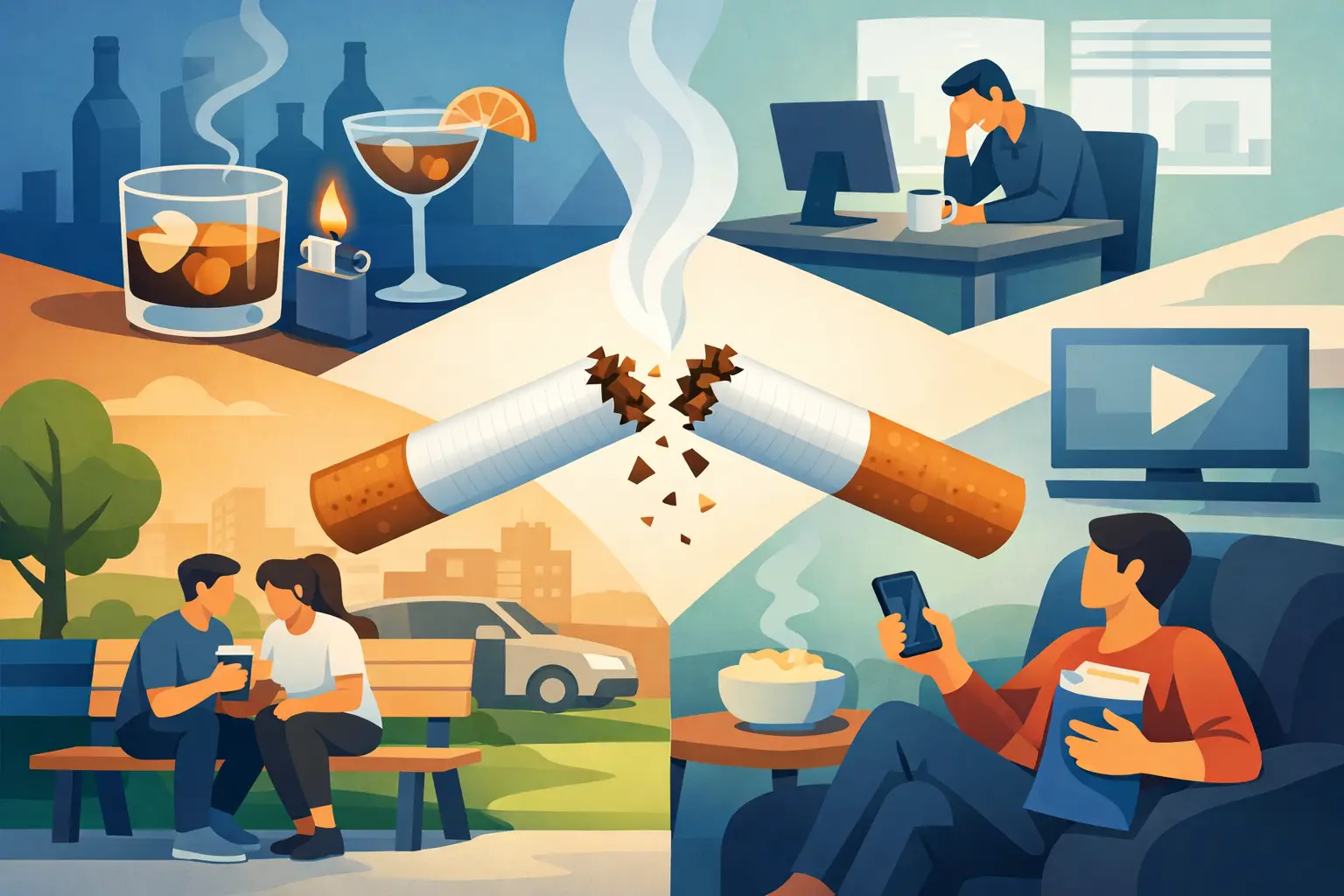
That first cigarette with coffee. The one after a stressful call. The smoke break that gives you five quiet minutes away from everyone else. These moments are why quitting can feel impossible, even when you are completely ready to be done with nicotine. A useful smoking cessation guide has to address more than the chemical craving. It has to help you take back the routines that cigarettes have claimed.
You are not weak because you have tried to quit before and started again. Nicotine dependence is powerful, and smoking becomes tied to your hands, your schedule, your moods, and the places you go. The goal is not to pretend those triggers do not exist. The goal is to meet them with a plan that gives you more control.
A Smoking Cessation Guide Built Around Your Day
Many quit attempts fail because the plan is too vague: throw away the cigarettes, promise yourself you are finished, and hope willpower carries the day. Willpower matters, but it is not a strategy for every traffic jam, cocktail, deadline, or difficult conversation.
Start by looking at when you smoke, not just how much you smoke. For two or three normal days, notice the pattern. Write down the time, what you were doing, who you were with, and how strong the urge felt. You may find that half your cigarettes are automatic rather than deeply satisfying. That is good news. Automatic habits can be interrupted and replaced.
Your triggers will probably fall into a few categories: routine, emotion, social settings, and physical cues. Morning coffee is a routine trigger. Anxiety or frustration is an emotional trigger. Going outside with coworkers is a social trigger. Finishing a meal or getting into your car can be a physical cue. Each one deserves a specific response.
Set a Quit Date You Can Defend
Pick a date within the next two weeks, rather than a distant Monday that keeps moving. Give yourself enough time to prepare, but not enough time to talk yourself out of it. Put the date somewhere visible and tell one person who will support the decision without lecturing you.
Before that date, remove cigarettes, lighters, ashtrays, and backup packs from the places where you normally reach for them. Clean your car, wash your jacket, and clear the smell from your usual smoking spaces. This is not about creating a perfect environment. It is about making the old habit less convenient.
Then decide what your first two smoke-free weeks will look like. If a certain bar, break area, or social routine makes you light up without thinking, change the routine temporarily. Meet a friend for breakfast instead of drinks. Take your work break somewhere new. Drive a different route if your usual one includes a cigarette stop. Small changes can break a surprisingly strong chain of cues.
Separate the Nicotine Craving From the Smoking Ritual
Nicotine withdrawal and the ritual of smoking are connected, but they are not the same problem. A patch, gum, lozenge, or prescription medication may help reduce nicotine cravings. For many adults, those tools are worth discussing with a healthcare professional, especially if previous attempts have been difficult.
But nicotine replacement does not always solve the need to hold a cigarette, step outside, inhale, exhale, or take a pause after a meal. That ritual can be the part that catches you off guard. You may feel physically steadier while still thinking, “I do not know what to do with my hands right now.”
This is where a behavioral substitute can make a practical difference. Some adult smokers use tobacco-free, nicotine-free herbal cigarettes to keep the familiar physical routine while working to remove nicotine from the equation. Smoke Free USA offers options made from toasted cocoa bean outer layer, with regular, menthol, cherry, and vanilla varieties for adults who want a familiar cigarette format without tobacco or nicotine.
That choice is personal, and it is not a free pass on smoking. Inhaling smoke can carry health risks, regardless of whether a product contains nicotine or tobacco. The healthiest end goal is to stop smoking entirely. Still, for adults who repeatedly return to nicotine cigarettes because the ritual is missing, a nicotine-free substitute may be a useful bridge or companion to a broader quit plan.
Build a Response for the First Ten Minutes
Cravings rise, peak, and pass. They can feel urgent, but they do not last forever. When one hits, do not negotiate with it in the moment. Use a response you chose ahead of time.
Try delaying the decision for ten minutes. Drink cold water, walk around the block, brush your teeth, text a supportive friend, or take slow breaths until the first wave drops. If the trigger is your normal smoke break, still take the break. Just change what happens during it. Protecting that pause can be more realistic than trying to power through a stressful day with no relief at all.
Keep your replacement tools where the urge happens. Put them in the car, your bag, your work drawer, or the pocket where you used to keep a pack. The best plan is the one that is available at 3:30 p.m. when you are irritated, hungry, and not thinking clearly.
Plan for Coffee, Cocktails, and Stress
You do not need to avoid your entire life forever, but you do need to respect your high-risk moments early on. Coffee is a common one. Change the cup you use, drink it in another room, or pair it with a short walk. If you usually smoke on the porch, sit somewhere else for the first few weeks.
Alcohol lowers your guard and often makes old habits feel more appealing. Consider taking a short break from drinking after your quit date, or set a clear rule before you go out. Bring a supportive friend, leave when cravings build, and do not test yourself just to prove you can handle it.
Stress deserves an honest plan. Cigarettes do not solve stress, but they can feel like a reliable pause because you have practiced that response for years. Replace the pause before you try to replace the feeling. Step outside, breathe, stretch your shoulders, or use a nicotine-free ritual if that is part of your plan. You are teaching your brain that a hard moment does not automatically require nicotine.
Expect Slips Without Calling Them Failure
A slip is one cigarette. A relapse is returning to your old pattern. The difference matters because shame can turn one rough moment into a full restart. If you smoke, stop and ask what happened. Were you drinking? Overtired? Around smokers? Did you run out of the substitute or support tool you planned to use?
Use the answer to adjust the plan that same day. Throw away the remaining cigarettes if you bought a pack. Recommit to the next smoke-free hour, not some dramatic future date. Every time you interrupt the old pattern, you are building evidence that nicotine does not control every decision.
Get More Support If You Need It
Quitting is not a test of whether you can do everything alone. A doctor, pharmacist, counselor, quit coach, or support group can help you choose treatment options and work through withdrawal. Ask for urgent medical help if you experience severe symptoms or have concerns about your health.
Your plan may include medication, nicotine replacement, behavioral support, a tobacco-free ritual substitute, or a combination. It depends on your history, your health, and the situations that have pulled you back before. What matters is choosing tools that address both the nicotine and the life you built around it.
The next craving does not need to decide your day. Have your response ready, take the pause you need, and let that moment pass without giving nicotine another vote.