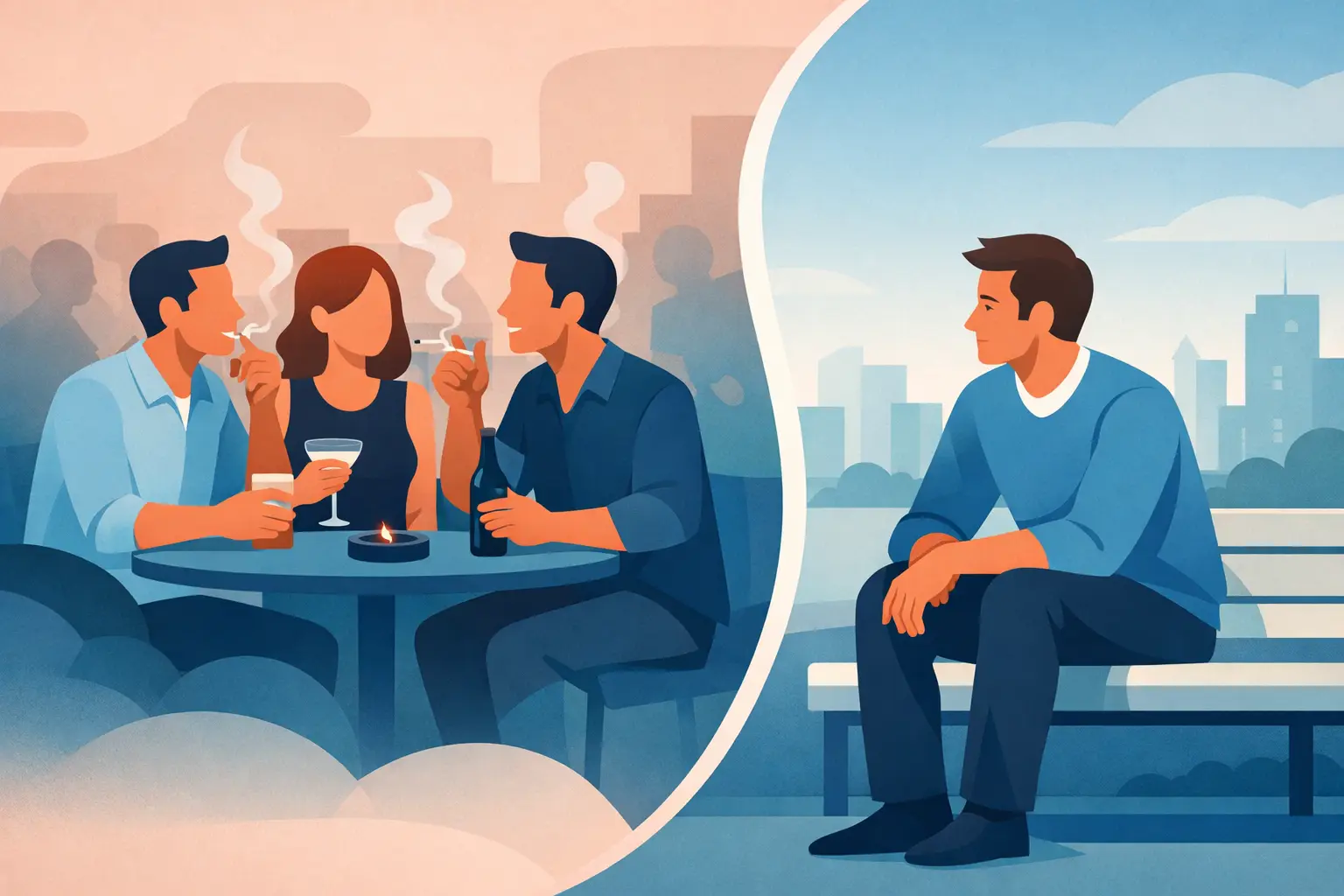
A drink with friends, a patio conversation, or the familiar offer of a cigarette outside can make a quit attempt feel fragile fast. Learning how to handle social smoking is not about avoiding every person or event that has ever involved cigarettes. It is about walking into those moments with a plan, protecting the progress you have made, and refusing to let one social trigger put nicotine back in charge.
Social smoking is tricky because it usually is not only about the cigarette. It is about belonging, taking a break, having something in your hand, or giving yourself a reason to step outside. If patches, gum, or willpower alone have not covered those moments for you, that does not mean you are failing. It means the ritual needs its own strategy.
Why social smoking can pull you back in
For many adults, social smoking follows a script. You finish dinner, someone heads outside, and a cigarette becomes part of the conversation. Or you have a cocktail, feel your guard drop, and suddenly smoking seems like the natural thing to do.
Nicotine dependence makes that pull stronger, but the surroundings matter too. Your brain has connected specific people, places, smells, and routines with smoking. That is why someone can feel steady all week, then struggle during a single night out.
The real risk is often the thought that one cigarette does not count. One cigarette may not erase your effort, but it can restart the pattern you have been working hard to break. For some people, it leads to another cigarette the next day. For others, it brings back cravings that had finally started to quiet down.
You do not need to panic over a slip. You do need to take it seriously enough to stop it from becoming a return to regular smoking.
How to handle social smoking before you go out
The best social-smoking decisions are usually made before the first drink is poured or the first cigarette is offered. Decide what your goal is for the event. Maybe it is to stay completely nicotine-free. Maybe it is to make it through a work break without buying a pack. Make the goal clear and simple.
Then identify your biggest trigger. Is it alcohol? A certain friend who always smokes? The drive home? The break outside a restaurant? Knowing the trigger lets you prepare for the exact moment that usually catches you off guard.
Tell at least one person you trust what you are doing. You do not need to make a speech or ask for permission. A simple, direct line works: “I’m not smoking nicotine tonight, so don’t offer me one.” The right friend will respect it. If someone pushes, that says more about them than it does about your plan.
It also helps to decide how long you will stay. If late-night drinking is when your resolve drops, leave before that point. That is not missing out. That is taking control of the part of the night that has cost you before.
Keep the ritual without feeding nicotine dependence
A major reason social smoking feels difficult is that your hands and senses expect something familiar. You may miss stepping outside, holding a cigarette, taking a pause, and joining the group. Replacing only the nicotine can leave that entire behavioral routine wide open.
Bring a substitute that fits the situation. Water, a straw, mints, or a snack can help for a short event. But for adults who strongly miss the physical smoking ritual, a nicotine-free, tobacco-free herbal cigarette can offer a more familiar alternative without putting nicotine back into the equation.
Smoke Free USA makes nicotine-free, tobacco-free herbal cigarettes from toasted cocoa bean outer layer, with regular, menthol, cherry, and vanilla options. They are made for adult smokers who want to break nicotine dependence while still having a tangible replacement for coffee breaks, cocktails, driving, and social moments.
That does not make smoking anything risk-free. Inhaling smoke from any burned material can irritate the lungs and carries health concerns. The healthiest option is not to smoke at all. But if the immediate choice is between returning to nicotine cigarettes or using a nicotine-free behavioral substitute while you work through your routines, having a plan can help you avoid the nicotine trap.
Have an answer ready when someone offers
The offer is often more difficult than the craving because it happens so quickly. You may not want to explain your quit attempt, and you may feel awkward saying no. A prepared response removes the need to think in the moment.
Try something short: “No thanks, I’m off nicotine.” You can also say, “I’m good,” or “I brought my own.” Then change the subject. Most people will move on faster than you expect.
Avoid debating whether you can handle just one. That conversation gives the craving too much room. Your goal is not to convince anyone that quitting is right for them. Your goal is to protect what is right for you.
If the people you are with keep pressuring you, step away. Get another drink, call a rideshare, or spend time with a different group. A social setting is supposed to be enjoyable. You do not owe anyone access to your recovery just because they are smoking.
Be smart about alcohol and smoking triggers
Alcohol lowers inhibitions, which is why it is one of the most common reasons people smoke after quitting. If drinks are a major trigger for you, the most practical move may be to cut back, choose alcohol-free options, or skip drinking for a while.
This is not an all-or-nothing rule. Some people can have one drink and stay in control. Others find that even one drink turns a firm no into a negotiation. Be honest about which one you are. There is no prize for testing yourself before you are ready.
Food can help too. Do not arrive hungry, especially if you know you will be drinking. Eat first, keep a nonalcoholic drink in your hand, and give yourself another reason to take breaks besides cigarettes.
If you smoke socially only, take it seriously
Some adults do not smoke daily but smoke every weekend, at parties, or only when drinking. It can be tempting to call that harmless because it does not feel like a full-time habit. But social smoking can still reinforce nicotine dependence and make it easier for occasional smoking to become regular smoking.
The good news is that social-only smokers can often make quick progress once they separate their social life from cigarettes. The first few events may feel strange. Then your brain begins to learn that you can have the conversation, the drink, the patio break, and the fun without nicotine.
Make your new rule easy to remember: no nicotine cigarettes, even socially. Clear rules are easier to follow than rules filled with exceptions.
What to do if you slip
If you have a cigarette, do not turn one mistake into a week, month, or year of smoking. Stop the spiral early. Throw away the rest of the pack if you bought one. Do not save it for later. Then ask what happened without beating yourself up.
Were you drinking? Did you go out without a substitute? Did someone surprise you with an offer? Did you assume you could handle one cigarette? Use the answer to strengthen the plan for next time.
A slip is information. It shows you where your system needs more support. If cravings are intense, frequent, or difficult to manage, consider talking with a healthcare professional about proven quit-support options. You can use practical behavioral tools alongside that support rather than trying to white-knuckle every trigger alone.
The next time friends head outside, you do not have to choose between isolation and nicotine. Bring your plan, keep your hands busy, say no without apology, and remember what you are fighting for: more control over your routines, your cravings, and your life.