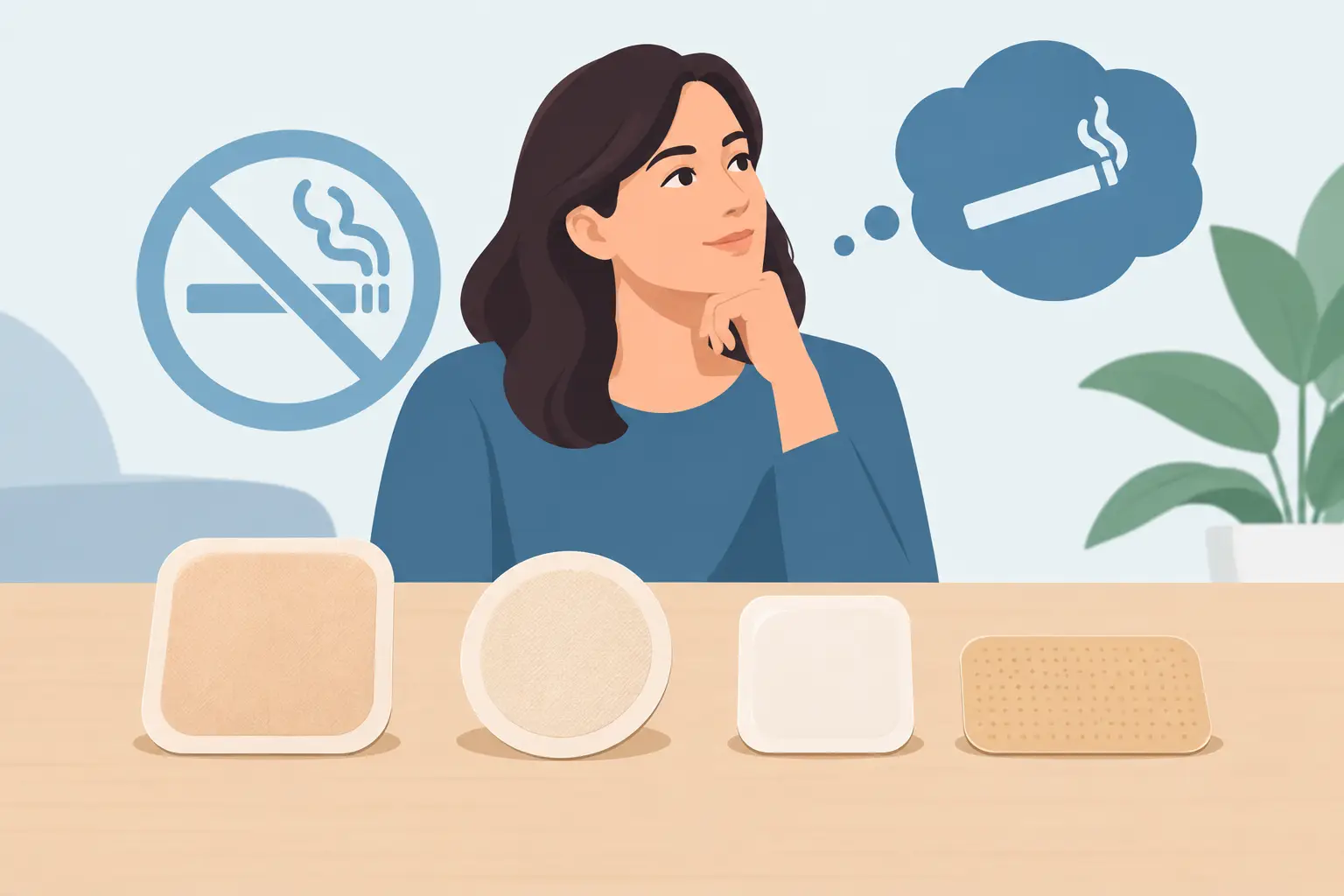
Your first cigarette may happen before you are fully awake. Another may show up in the car, on a work break, after dinner, or the second stress hits. That is why a nicotine patches comparison needs to go beyond dosage and price. A patch can help manage nicotine withdrawal, but it does not hold a coffee cup with you, occupy your hands, or replace the familiar pause of stepping outside.
Patches are a legitimate quitting tool for many adult smokers. They deliver nicotine through the skin at a slow, steady rate, which can take the edge off withdrawal without asking you to smoke, chew, or vape. But the best choice depends on what keeps pulling you back to cigarettes: the nicotine, the ritual, or both.
Nicotine Patches Comparison: What Changes Between Brands
Most nicotine patches work on the same basic principle. You apply one patch to clean, dry skin and it releases nicotine gradually over a set period. The major differences are usually dose, wear time, adhesive comfort, price, and how your skin reacts.
Common over-the-counter options come in 21 mg, 14 mg, and 7 mg strengths. The 21 mg patch is generally intended for people who smoke more heavily, while lower strengths are often used later in a step-down plan. Package directions matter. Do not assume a higher dose will make quitting easier, and do not cut patches unless the product instructions specifically say it is appropriate.
The two wear-time formats you will see most often are 24-hour and 16-hour patches. A 24-hour patch may help someone who wakes up with strong cravings or struggles first thing in the morning. The trade-off is that some people experience vivid dreams or sleep disruption. A 16-hour patch comes off before bed, which may be more comfortable for sleep but can leave a gap in overnight nicotine coverage.
Generic patches can contain the same active ingredient and dose as name-brand versions, often at a lower price. That does not mean every patch feels identical. Adhesive quality can affect whether it stays on during a sweaty workday, and the materials can affect skin irritation. If one brand leaves a rash, it does not automatically mean patches are off the table. It may mean trying a different adhesive or speaking with a pharmacist or clinician.
What a Patch Does Well
A patch is built for steady control, not instant relief. That can be a major advantage if your hardest problem is the low-level withdrawal that follows you all day: irritability, restlessness, trouble concentrating, or the constant feeling that something is missing.
Unlike a cigarette, a patch does not create a sharp nicotine spike and crash. Its slow delivery can make cravings less commanding over time. You do not need to stop what you are doing to use it, which is useful at work, on a flight, in meetings, or during a long drive.
For many adults, the patch also simplifies the quitting plan. Put it on as directed, rotate application sites, and follow the recommended step-down schedule. There is less moment-by-moment decision-making than with gum or lozenges.
That simplicity has a limit. When a craving hits hard after an argument, a drink, or a meal, the patch is not designed to provide an immediate sensation. It is already working in the background. If the urge is about a sudden nicotine craving, some people use a short-acting nicotine replacement product alongside a patch under appropriate medical or pharmacist guidance. If the urge is about reaching, holding, inhaling, and taking a break, nicotine alone may not solve the problem.
The Gap Most Patch Comparisons Miss
Smoking is rarely just one habit. It is a series of learned routines: lighting up with coffee, taking five minutes alone after a difficult call, having something in your hand while driving, or sharing a cigarette outside with friends. A patch addresses the chemical dependence. It does not recreate the physical ritual.
This is why some smokers say a patch “did not work” even when it reduced withdrawal. They may be feeling fewer nicotine symptoms while still facing the empty moments where cigarettes used to fit. That gap can be powerful enough to send someone back to smoking.
A stronger quitting strategy accounts for both sides. Use the patch, if it is right for you, to reduce dependence on nicotine. Then plan a replacement for the situations that trigger the automatic reach for a cigarette. A walk, water, a straw, deep breathing, or a quick text to someone supportive can help. Still, for adults who specifically miss the cigarette ritual, those substitutes may feel too far removed from the real routine.
That is where a nicotine-free, tobacco-free herbal cigarette can be a practical behavioral substitute for some adult smokers. Smoke Free USA uses toasted cocoa bean outer layer in a familiar cigarette form, giving customers an option for the hand-to-mouth routine and smoking moments without nicotine or tobacco. It is not a nicotine replacement product, and it is not risk-free simply because it is nicotine-free. Any smoke can irritate the lungs. But for an adult who is trying to separate nicotine from the ritual, it can be a tool to consider alongside a broader quit plan.
Patch Side Effects and Safety Questions
Skin redness, itching, or mild irritation at the application site are common patch complaints. Rotating where you apply the patch can help. Headache, nausea, dizziness, and sleep changes can also happen, especially if the dose is too strong for your needs or you are still getting nicotine from other sources.
Pay attention to your body. Remove the patch and seek medical advice if you have severe symptoms, a serious skin reaction, chest pain, a rapid or irregular heartbeat, or anything that feels alarming. Adults who are pregnant or breastfeeding, have recent heart problems, take prescription medicines, or have certain medical conditions should ask a healthcare professional before using nicotine replacement therapy.
Follow the label carefully. Keep unused and used patches away from children and pets because patches can retain nicotine after use. Fold a used patch sticky sides together before disposal. Do not place one on broken or irritated skin, and do not apply more than directed because you are having a rough day.
It is also worth being honest about slips. If you smoke while wearing a patch, do not turn one cigarette into a reason to abandon the entire attempt. Review the product instructions and get advice from a pharmacist or clinician about how to proceed safely. A slip is information: it tells you which trigger needs a better plan.
How to Choose the Right Approach for You
Start with the pattern behind your smoking. If you smoke throughout the day to avoid withdrawal, a patch may be a strong foundation. If your cravings are concentrated at certain moments, you may need additional support for those specific times. If you have tried patches before and still returned to cigarettes during coffee, alcohol, driving, or stress, focus on the ritual instead of blaming yourself.
Think about sleep, too. Someone with intense morning cravings may prefer the steadiness of a 24-hour patch, while someone prone to vivid dreams may be better served by a 16-hour option. Price matters, but a patch that causes constant irritation or falls off halfway through the day is not a bargain.
Most of all, build a plan you can actually live with. Tell yourself what happens after meals, on breaks, and when a craving arrives. Remove cigarettes, lighters, and ashtrays from easy reach if that supports your goal. Keep your replacement tools where the urge usually catches you: in the car, at your desk, or near the coffee maker.
Quitting nicotine is a fight, but it does not have to be a fight with empty hands. Choose tools that reduce withdrawal and give your daily routines somewhere new to go. Each cigarette you do not smoke is a moment of control you are building for yourself.