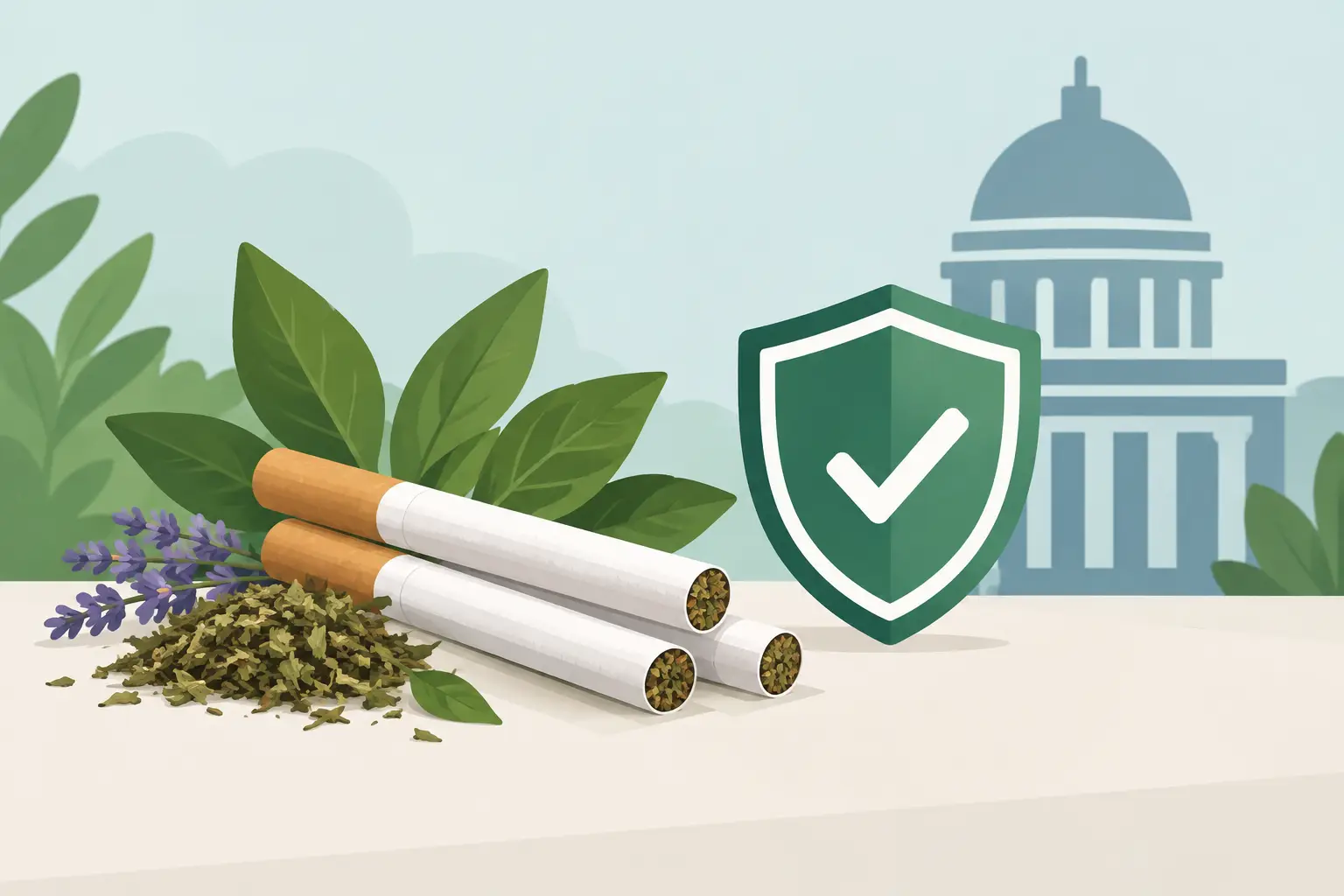
That cigarette after coffee, during a drive, or on a stressful work break can feel like more than nicotine. So when you look for a tobacco-free replacement, one question comes up fast: are herbal cigarettes FDA approved? The direct answer is no – FDA approval is not something herbal cigarettes receive as a category, and no cigarette is FDA-approved as safe.
That does not mean nicotine-free herbal cigarettes are the same as conventional tobacco cigarettes. It means you deserve a clear picture of what “FDA approved” actually means before choosing a product to support your next step away from nicotine.
Are Herbal Cigarettes FDA Approved?
No. Herbal cigarettes are not FDA-approved smoking cessation medications, and they should not be presented as FDA-approved treatments for nicotine addiction.
The FDA approves certain drugs and medical products after reviewing evidence for safety and effectiveness for a specific use. Think nicotine patches, nicotine gum, lozenges, or prescription medications that are authorized for smoking cessation. A cigarette-like product made from herbs, cocoa bean material, or other plant ingredients does not become an FDA-approved quit aid simply because it contains no tobacco or nicotine.
There is another point that causes confusion. The FDA regulates many tobacco products, but regulation is not the same thing as approval. For tobacco products, the agency may require marketing authorization before a product can be legally sold. That is not a statement that the product is safe, healthy, or recommended for quitting.
A product’s ingredients, intended use, labeling, and marketing claims all affect how it may be treated under federal law. Tobacco-free herbal cigarettes may fall outside some tobacco-specific requirements, but that does not create an FDA approval status. State and local rules can also apply, especially around age restrictions, sales, packaging, and public smoking rules.
FDA Approval Is Not a Safety Label
“FDA approved” sounds like a simple yes-or-no safety check. In reality, it is a specific regulatory term. When it comes to cigarettes, it is the wrong standard to use if you are trying to decide whether a product is risk-free.
Burning and inhaling any plant material creates smoke. Smoke can contain carbon monoxide, fine particles, and other compounds that can irritate the lungs and airways. Being tobacco-free and nicotine-free removes two major concerns associated with conventional cigarettes, but it does not make inhaling smoke harmless.
That trade-off matters. If your goal is to get nicotine out of your daily life while keeping a familiar hand-to-mouth routine for a short period, a nicotine-free cigarette may feel more practical than gum or a patch alone. If your goal is to avoid smoke exposure entirely, a non-combustible approach is the better direction.
You do not have to pretend those are identical goals. Quitting nicotine and quitting the physical smoking ritual can happen on different timelines for different people.
What Nicotine-Free Herbal Cigarettes Can Do
For many adult smokers, the toughest moments are not always the biggest nicotine cravings. They are the routines built around smoking: stepping outside after a meal, taking a break with coworkers, holding something while having a drink, or reaching for a cigarette during stress.
Nicotine-free herbal cigarettes can provide a familiar physical substitute during those trigger-heavy moments. The action of opening a pack, lighting up, holding a cigarette, and taking a break may help some adults interrupt the automatic reach for a tobacco cigarette.
Smoke Free USA offers tobacco-free, nicotine-free cigarettes made with the tender outer layer of cocoa beans that is ground and toasted for a mild aroma and flavor. The purpose is straightforward: give adult smokers a cigarette-form alternative when the ritual is hitting hard, without adding nicotine back into the cycle.
That can be useful as part of a personal quit plan, particularly for someone who has tried patches or gum but still misses the behavior of smoking. It is not a guarantee, a prescription, or a replacement for professional medical care. It is a practical tool for a practical problem: the habit can keep pulling at you even after you are ready to stop feeding nicotine dependence.
What Herbal Cigarettes Cannot Do
A tobacco-free cigarette is not a free pass to smoke without risk. It should not be described as healthy, harmless, or FDA-approved. It also should not be marketed as a proven medical treatment unless it has gone through the required drug approval process.
The biggest benefit of a nicotine-free option is what it leaves out: nicotine and tobacco. That matters for an adult smoker working to break the chemical dependence that keeps conventional cigarettes in control. But combustion still has consequences, and anyone with lung disease, heart disease, asthma, pregnancy concerns, or other health conditions should speak with a qualified healthcare professional before using any smoked product.
If you have already quit nicotine, be thoughtful about whether recreating the act of smoking supports your progress or makes it harder. For some people, a temporary ritual substitute is a bridge. For others, it keeps the old cue-response pattern alive. Your own triggers and history matter more than one-size-fits-all advice.
How to Read Claims Without Getting Misled
When comparing herbal cigarettes, focus on plain language instead of buzzwords. “Natural” does not mean safe to inhale. “Herbal” does not mean FDA-approved. “Nicotine-free” means there is no nicotine in the product, but it does not mean there is no smoke exposure.
Be especially cautious with dramatic medical claims. A seller should not promise that a cigarette will cure addiction, eliminate cravings, or guarantee that you will quit. Nicotine addiction is powerful, and relapse can happen even when you are doing many things right.
A more honest claim is that a nicotine-free cigarette may help an adult smoker manage the behavioral side of quitting. That is a meaningful distinction. The product can give your hands and routine something familiar while you work on the cravings, situations, and stress patterns that used to lead directly to tobacco.
Building a Plan That Fits Real Life
The strongest quit plans usually prepare for your most predictable smoking moments rather than relying on willpower alone. If your first cigarette normally comes with coffee, decide what you will do before tomorrow morning arrives. If driving, alcohol, or a work break is your trigger, have an alternative ready before the urge starts negotiating with you.
A nicotine-free herbal cigarette may fit into that plan as a situational substitute. You might reserve it for the times when the physical ritual feels hardest, rather than treating it as an automatic all-day replacement. Some adults also use behavioral tools alongside FDA-approved nicotine replacement therapy or support from a healthcare professional. The right combination depends on your nicotine dependence, health history, and what has failed you before.
Keep the plan simple: identify the trigger, choose your replacement, and make tobacco the harder option to reach for. Every tobacco cigarette you do not smoke is a moment where you are taking back control from nicotine.
The FDA approval question has a clear answer: herbal cigarettes are not FDA-approved. But your next move can still be purposeful. Choose tools honestly, understand their limits, and use every familiar smoking moment as another chance to break the nicotine addiction on your terms.