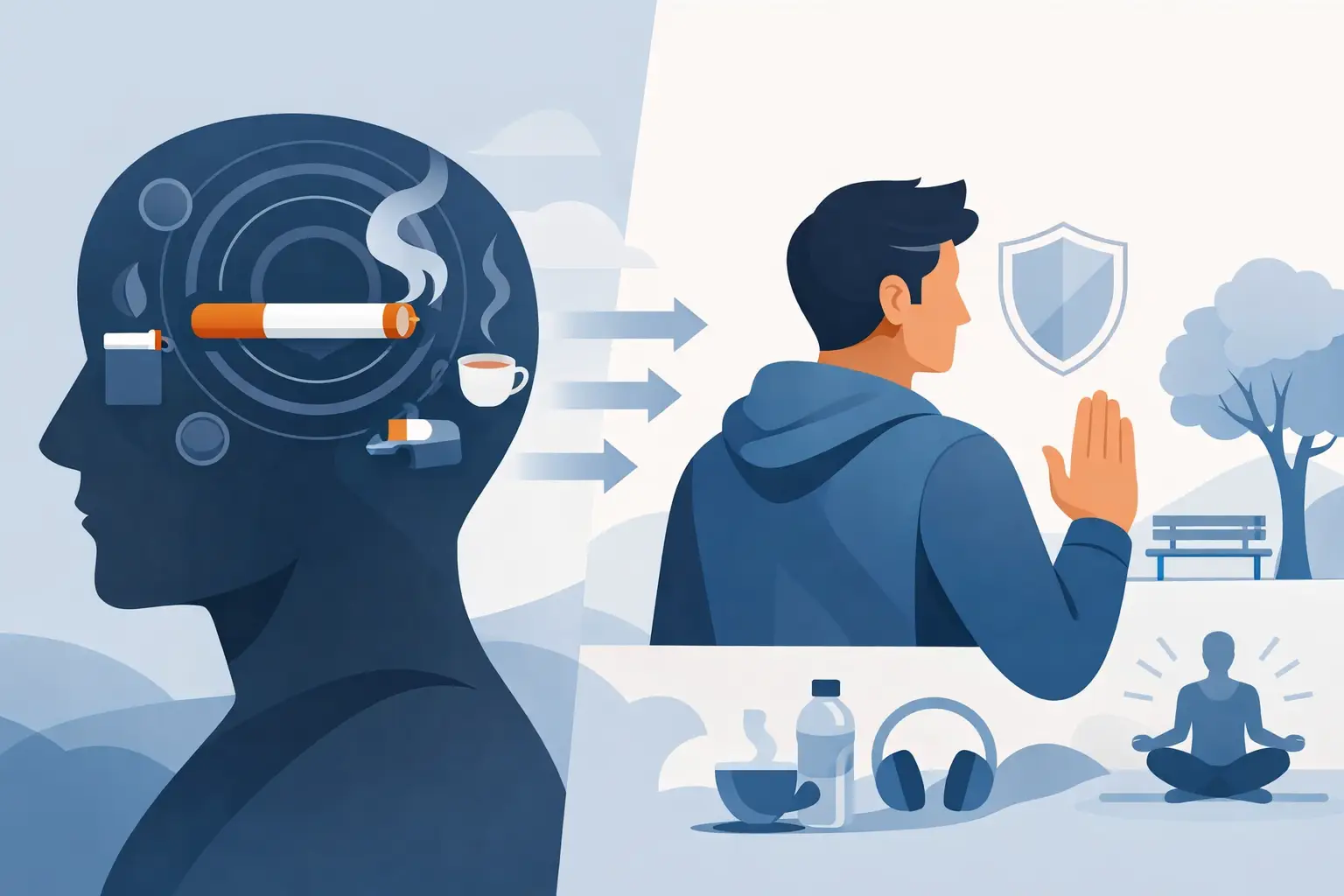
That cigarette you reach for at 7:30 a.m. may not be about nicotine alone. It may be the coffee mug in your hand, the spot where you stand, the quiet before work starts, or the feeling that the day has officially begun. Learning how to identify cigarette cues gives you a practical advantage: you can prepare for the moments that usually pull you back into smoking instead of being caught off guard by them.
A cue is anything that signals your brain, “This is when we smoke.” After years of repetition, the signal can be a place, person, emotion, drink, time of day, or simple action like getting in the car. Nicotine addiction is real, but the routine around it can be powerful too. If patches, gum, or pills have not fully solved the problem, it may be because they do not replace the familiar smoking moment.
How to Identify Cigarette Cues in Your Day
Start by paying attention before you try to change everything. For three days, keep a quick note on your phone every time you want a cigarette or light one. You do not need a detailed journal. Record the time, where you are, what you were doing, who was around, and what you were feeling.
The goal is to spot the pattern underneath the urge. “I wanted a cigarette at 10:15” is useful. “I wanted a cigarette at 10:15 after answering a frustrating email, while stepping outside with a coworker” is a cue you can actually plan for.
Separate physical nicotine cravings from routine cravings when you can. A physical craving may feel urgent, restless, or difficult to focus through. A routine craving often arrives right on schedule: after a meal, during a break, with a beer, or when you start driving. Many urges are a mix of both. You do not have to diagnose every craving perfectly. You just need to recognize what is setting it off.
Look for the moments that repeat
Most smokers do not smoke randomly. They smoke in familiar sequences. Coffee leads to a cigarette. A stressful call leads to stepping outside. Finishing dinner leads to sitting on the porch. The brain starts expecting the next step before you consciously decide.
Ask yourself a simple question each time an urge hits: “What happened right before I wanted to smoke?” Your answer will often reveal the cue faster than asking why you want a cigarette. The “right before” might be pouring coffee, closing a laptop, getting into the car, seeing someone else smoke, or feeling tension in your chest.
Notice emotional cues without judging yourself
Stress is an obvious trigger, but it is not the only emotional one. Boredom, loneliness, celebration, irritation, relief, and even confidence can all become cigarette cues. Some people smoke after a hard conversation. Others smoke when they finally have a few quiet minutes alone.
Do not treat these patterns like a personal failure. They are learned associations. The more clearly you see them, the more choices you have in the moment. That is how you begin to take control away from nicotine and put it back in your own hands.
The Most Common Cigarette Cues
Your trigger list will be personal, but certain cues show up again and again for adult smokers. Watch closely for these situations:
- Morning coffee or tea, especially in the same chair, on the same porch, or during the same commute.
- Driving, including getting in the car, sitting in traffic, stopping for gas, or taking a long trip.
- Work breaks, shift changes, clocking out, and time spent with coworkers who smoke.
- Alcohol, cocktails, parties, concerts, and restaurants with outdoor smoking areas.
- After meals, especially when the meal marks the end of the day or a chance to relax.
- Stressful moments such as arguments, deadlines, bills, or waiting for difficult news.
- Seeing cigarette packs, smelling smoke, or watching another person light up.
This list is not meant to make daily life feel like a minefield. It is meant to show you where a plan will matter most. If coffee is your biggest cue, you do not need to fear coffee forever. You need a new response ready before the first sip.
Match Each Cue With a Real Replacement
A vague promise to “just avoid smoking” is hard to follow when the cue is built into your day. A better approach is to decide what you will do instead in the exact situations where cigarettes normally show up.
For a short break at work, you may still need to leave your desk, get fresh air, and give your hands something to do. For driving, you may need something accessible in the car that helps interrupt the automatic reach for a pack. For after dinner, you may need a new closing ritual: tea, a walk, cleaning up right away, or sitting outside without nicotine.
The right replacement depends on what you miss. Some people mainly need help with nicotine withdrawal and choose nicotine replacement under guidance from a healthcare professional. Others find that the hand-to-mouth motion, the inhale and exhale, the pause, and the social ritual are what keep pulling them back.
That is where a nicotine-free, tobacco-free cigarette alternative may fit. Smoke Free USA herbal cigarettes are made with toasted cocoa bean outer layer and are designed for adults who want to keep the familiar physical ritual while working to break nicotine dependence. Regular, menthol, cherry, and vanilla options can make it easier to choose something that suits the moment you usually smoke.
A substitute is not magic, and it should not become an excuse to ignore your trigger patterns. It is a tool. Used intentionally, it can help you get through the coffee break, the drive home, or the social event without feeding nicotine addiction. Smoking anything carries health risks, so nicotine-free and tobacco-free does not mean risk-free. But removing nicotine can be a meaningful step for adults focused on ending nicotine dependence.
Make a Cue Plan Before the Craving Starts
Once you know your top three cues, write an if-then plan for each one. Keep it direct. “If I finish dinner and want to smoke, then I will clear my plate, make tea, and sit somewhere different for 10 minutes.” “If I get stressed at work, then I will take a walk around the building before I decide what to do.”
The first few times may feel awkward because you are changing a sequence your brain knows well. That does not mean the plan is failing. It means you are interrupting an old loop. Repetition is what built the smoking ritual, and repetition is what can weaken it.
Make your environment work for you. Remove ashtrays, lighters, and open cigarette packs from the places tied to your strongest habits. Clean your car if it smells like smoke. Change the chair you use with morning coffee. Take a different route on the way to work if your usual stop is a convenience store. Small changes can make the cue less automatic.
It also helps to tell one supportive person what you are doing. You do not need a speech or a big announcement. Let them know that certain situations are difficult and that you may need a different plan when drinking, taking breaks, or dealing with stress. Support works best when it is specific.
When a Cue Catches You Off Guard
Even with a plan, a strong cue will sometimes hit unexpectedly. Maybe a friend offers you a cigarette. Maybe traffic is worse than usual. Maybe you had a rough day and the old routine feels like the fastest relief.
Pause before you act. Give yourself five minutes. Take a few slow breaths, drink water, walk around, text someone, or use the replacement you prepared. The point is not to pretend the craving is not there. The point is to create enough space that the cue does not make the decision for you.
If you smoke a traditional cigarette after trying to quit, do not turn one moment into a reason to give up. Look at what triggered it. Was it alcohol, stress, an empty pack of alternatives, or being around smokers? That information is useful. Adjust the plan and keep going.
Every cue you identify is one less surprise waiting in your day. Start with the next cigarette you want, notice what came right before it, and choose one different response. That is a real move toward breaking the nicotine addiction on your terms.