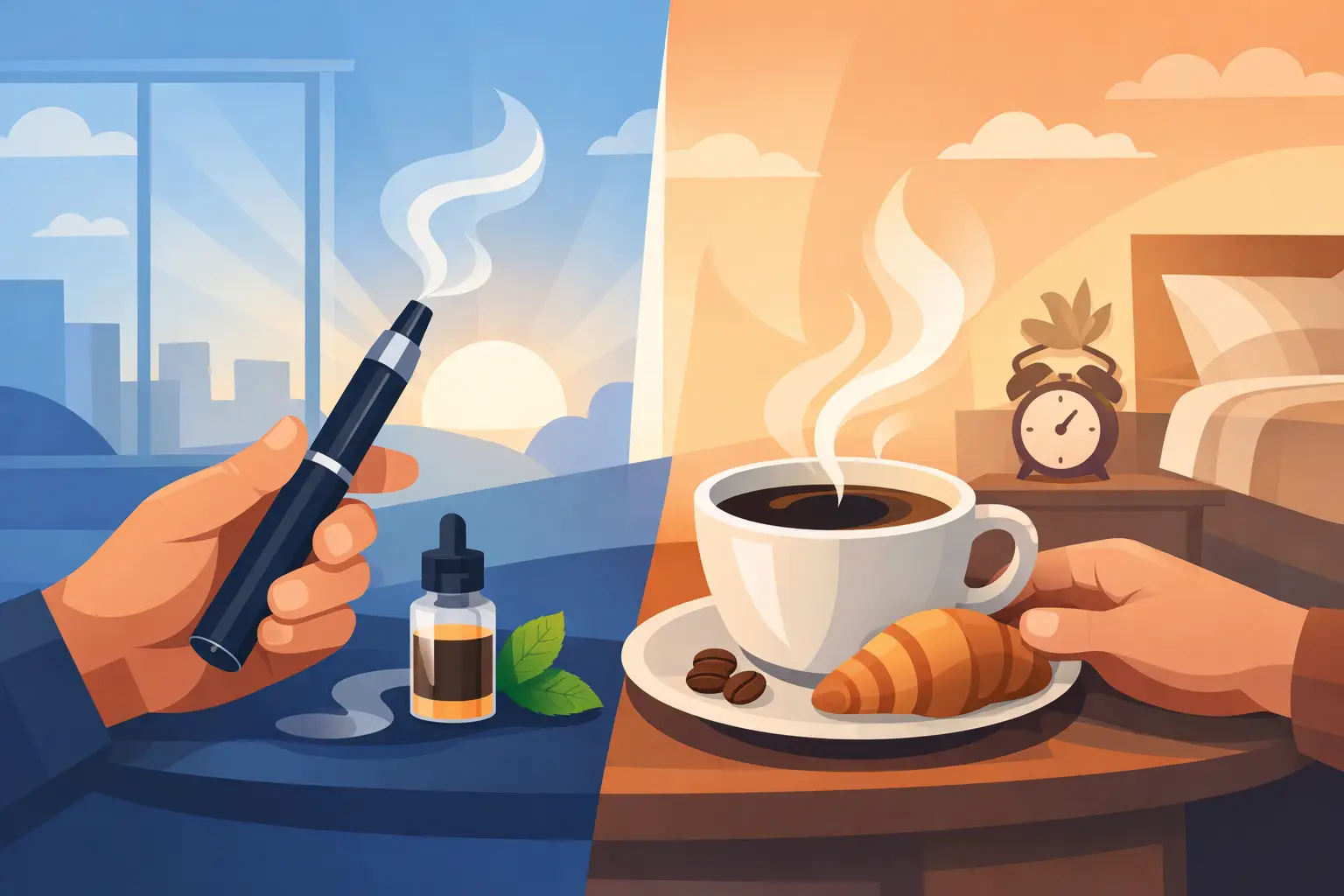
The coffee maker clicks off, the first warm sip hits, and your hand reaches for a cigarette before you have fully woken up. That is why finding a smoking substitute for morning coffee matters. The first cigarette of the day is rarely just about nicotine. It is a practiced routine – coffee, smoke, inhale, exhale, repeat.
Breaking nicotine addiction gets easier when you stop treating that routine like a minor detail. You need a plan for the exact moment it shows up. Morning coffee is one of the biggest trigger moments for long-term smokers, but it does not have to control the rest of your day.
Why Morning Coffee Can Trigger Smoking So Hard
Coffee and cigarettes become linked through repetition. If you have smoked with your morning cup for years, the smell of brewed coffee, your favorite chair, the porch, the drive to work, or even the quiet before everyone else wakes up can signal your brain to expect nicotine.
Caffeine can make the urge feel sharper, too. Coffee is stimulating, and many smokers associate that alert feeling with the relief they expect from a cigarette. When you remove nicotine, your body may react with restlessness, irritability, or the feeling that something is missing from the morning.
That missing feeling is real, but it is not proof that you need another nicotine cigarette. It is proof that your brain learned a strong connection. You can build a new one.
The ritual is a separate battle
Patches, gum, and other nicotine-replacement products can help some adults manage withdrawal. But they do not always address the physical routine: holding a cigarette, stepping outside, taking a draw, and pausing for a few minutes before the day begins.
For many people, that is the part that causes relapse. They may get through the afternoon, then return to cigarettes the next morning because coffee without the familiar ritual feels incomplete. A practical plan needs to account for both nicotine cravings and the habit wrapped around them.
Choosing a Smoking Substitute for Morning Coffee
The best substitute depends on what you miss most. If you mainly need something in your hands, a mug, straw, toothpick, or pen may give you a small outlet. If you need the break itself, change where you drink your coffee and take five quiet minutes without rushing into the day.
But if the smoking ritual is your strongest trigger, a nicotine-free, tobacco-free herbal cigarette may feel closer to the experience you are trying to replace. It lets you maintain a familiar smoking moment while removing the nicotine that keeps dependence going.
Smoke Free USA offers herbal cigarettes made with the tender outer layer of cocoa beans, ground and toasted for a mild flavor and pleasant aroma. They contain no nicotine and no tobacco, and they come in regular, menthol, cherry, and vanilla varieties. For an adult smoker who has tried to quit before, having a familiar cigarette form available during the morning coffee trigger can create breathing room between a craving and a return to nicotine.
That said, a nicotine-free cigarette is not a health product and it is not risk-free. Inhaling smoke from any burned plant material can irritate the lungs and expose you to harmful substances. The goal is not to pretend smoking is harmless. The goal is to remove nicotine from a hard-to-break routine and use that control to move away from conventional cigarettes. If you have a respiratory condition, are pregnant, or have concerns about quitting, speak with a healthcare professional before using any smoking product.
Make the First Cup a New Routine
You do not have to give up coffee to break the coffee-and-cigarette connection. You need to make a few deliberate changes before the craving takes over.
Change one part of the setting
Keep your coffee, but disrupt the automatic pattern. Drink it in a different room, use a different mug, sit on the other side of the table, or take it on a short walk. A small environmental change tells your brain this is not the exact same routine that ended with nicotine.
If you usually smoke on the porch, try drinking half your coffee indoors first. If driving is the trigger, wait until you arrive at work before having coffee. You are not punishing yourself. You are separating two habits that have been stuck together for too long.
Decide before the craving starts
Morning cravings are easier to handle when you make your choice the night before. Put your nicotine-free alternative where you normally keep cigarettes. Clear conventional cigarettes, lighters, and ashtrays from the spot where you drink coffee. Make the easier option the one that is right in front of you.
Do not wait for a craving to ask, “What should I do now?” By then, nicotine has the advantage. A simple decision like “I will drink my coffee, wait ten minutes, and use my substitute if I still want to smoke” puts you back in charge.
Use the pause instead of fighting it
A craving rises quickly, but it also passes. Rather than telling yourself you can never smoke again, focus on getting through the next few minutes without nicotine. Take slow breaths. Sip your coffee. Let your hands follow a new routine. If you use a nicotine-free herbal cigarette, treat it as a substitute for the ritual, not an excuse to keep nicotine within reach.
This approach is especially useful for people who feel that gum or lozenges do not satisfy the hand-to-mouth habit. There is no single quitting tool that works for every adult smoker. Some people use behavioral substitutes alongside nicotine-replacement therapy. Others prefer to focus on removing nicotine while keeping a temporary version of the ritual. What matters is choosing a plan you can actually follow on a difficult morning.
Watch for the Coffee Triggers You Do Not Notice
Your first cup may not be the only trigger. Refilling coffee, scrolling your phone, checking email, walking the dog, or leaving for work can each be attached to a cigarette. Pay attention for a few days without judging yourself. Notice the time, place, emotion, and action that come right before the urge.
Then give each trigger a response. For example, if email and coffee create a craving, read email after you finish your cup. If the drive to work is the problem, bring a water bottle and play a podcast that keeps your attention. If stress is the spark, step outside for fresh air without automatically reaching for nicotine.
The point is not perfection. A rough morning does not erase progress. If you smoke a conventional cigarette after several nicotine-free mornings, look at what happened and adjust the plan. Maybe the craving came earlier than expected. Maybe you ran out of your substitute. Maybe the coffee routine needs another change. Learn from it, then keep going.
Give Yourself a Win Before 9 A.M.
The first nicotine-free coffee can feel strange. The fifth often feels more manageable. After enough repetition, your brain begins to learn that coffee can still mean comfort, focus, and a quiet moment without also meaning nicotine.
Start with tomorrow morning. Prepare your coffee, prepare your substitute, and make one clear promise: your routine does not get to make decisions for you. You can keep the moment you enjoy while taking back control from nicotine.