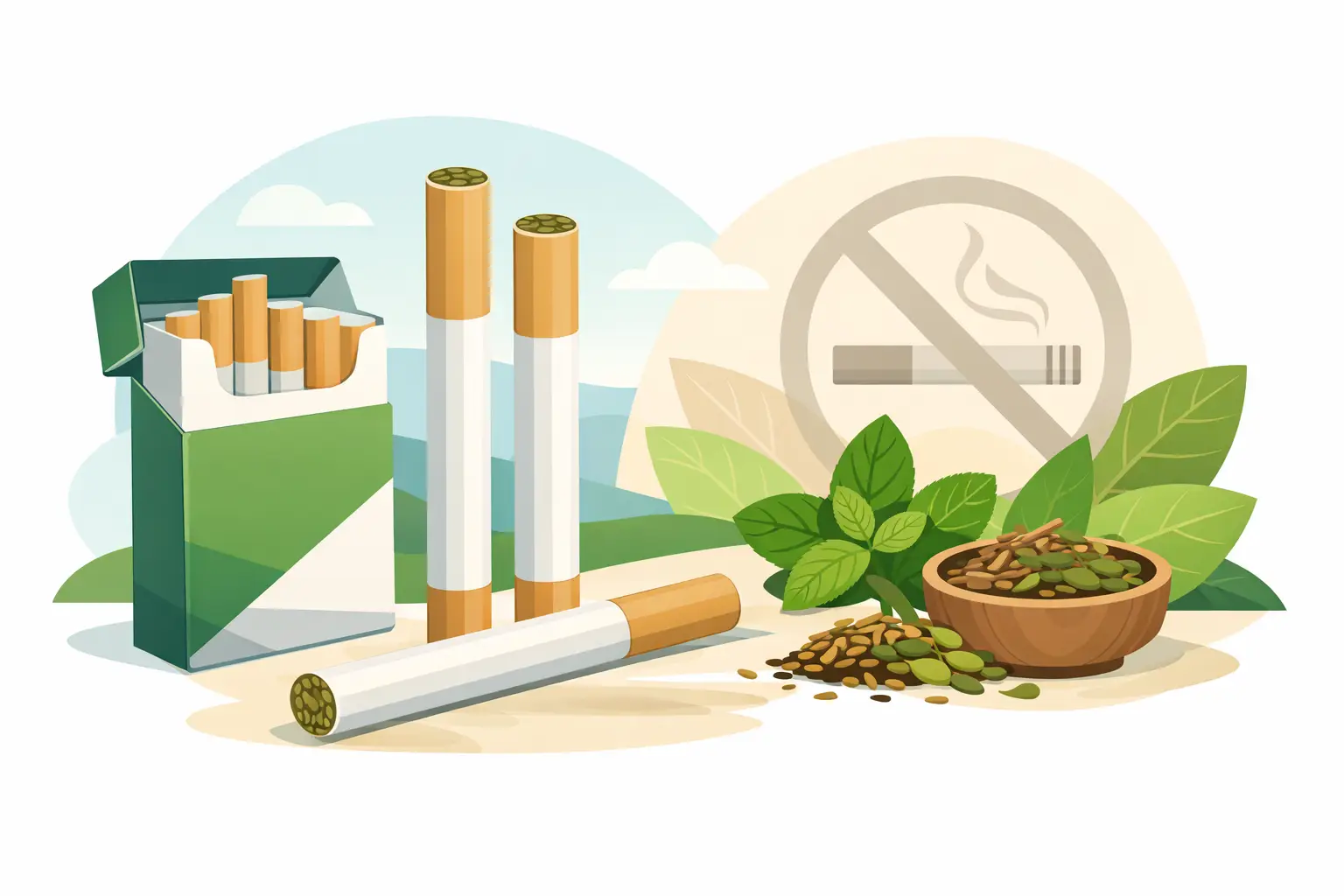
A cigarette craving does not always show up as a simple need for nicotine. It can hit when coffee is brewing, when you get in the car, after dinner, during a stressful work break, or while having a drink with friends. That is why many adult smokers ask, what are tobacco free cigarettes and whether they can help when gum, patches, or willpower alone have not addressed the ritual.
Tobacco-free cigarettes are smokeable products made without tobacco. Many are also nicotine-free, though the two terms are not automatically interchangeable. For adults trying to break nicotine dependence, a nicotine-free, tobacco-free cigarette can provide a familiar physical routine without adding more nicotine to the cycle.
What Are Tobacco Free Cigarettes?
Tobacco-free cigarettes look and are used much like conventional cigarettes, but their smoking material does not come from the tobacco plant. Instead, they may be made with herbs, tea blends, or other plant-based materials.
At Smoke Free USA, the smoking blend uses the tender outer layer of cocoa beans. The cocoa bean layer is ground and toasted to create a mild flavor and a pleasant aroma. There is no tobacco and no nicotine in the product.
That distinction matters. Traditional cigarettes contain tobacco, and tobacco naturally contains nicotine, the highly addictive chemical that keeps many people reaching for the next cigarette. A nicotine-free herbal cigarette does not supply that nicotine hit. It gives you a cigarette-shaped replacement for the actions and moments that often keep smoking in place.
For someone who has smoked for years, those actions can be powerful: holding a cigarette, lighting it, stepping outside, inhaling and exhaling, and taking a few minutes away from a stressful situation. Removing nicotine is one fight. Changing those learned routines is another.
Tobacco-Free Does Not Always Mean Nicotine-Free
When shopping, read the product description instead of assuming the label tells the whole story. A product can be tobacco-free yet still contain nicotine if nicotine has been added from another source. Likewise, an herbal product may contain neither tobacco nor nicotine.
If your goal is to stop feeding nicotine dependence, look specifically for both terms: tobacco-free and nicotine-free. That is the combination designed to help you separate the physical smoking ritual from the chemical pull of nicotine.
This is also different from nicotine replacement therapy. Patches, gum, lozenges, and some other quit tools deliver nicotine in controlled amounts to help reduce withdrawal. Tobacco-free, nicotine-free cigarettes do not. They are a behavioral substitute, not a nicotine-delivery product.
Neither approach has to be an all-or-nothing choice. Some adults use a nicotine-free cigarette as part of a broader quit plan, including nicotine replacement, counseling, support from a healthcare professional, or a personal step-down plan. The best approach depends on your history, your triggers, and how strongly nicotine withdrawal affects you.
Why the Smoking Ritual Is So Hard to Leave Behind
A smoker can understand every reason to quit and still feel caught off guard by a craving. That is not a character flaw. Nicotine dependence is real, and smoking is also tied to repetition. Over time, the brain starts linking certain places, feelings, and activities with a cigarette.
Morning coffee can feel unfinished without one. A drive can feel longer. A tense conversation can trigger the urge to step outside. A work break may feel less like a break if there is nothing in your hand.
Tobacco-free cigarettes are meant for those trigger-heavy moments. They can give adult smokers a practical replacement while they work on changing the association between nicotine and everyday life. You still have a familiar object, a familiar pause, and a familiar hand-to-mouth motion, but you are not reinforcing the nicotine addiction.
That sense of control can make a difference. Instead of telling yourself you must simply sit through every ritual craving with nothing to replace it, you have another option available. For many smokers, that makes the first difficult days and weeks feel more manageable.
How Nicotine-Free Herbal Cigarettes May Fit a Quit Plan
There is no single quitting method that works for every smoker. Some people quit abruptly. Others gradually reduce traditional cigarettes. Some need medication or nicotine replacement. Others find the habit itself is the part that keeps pulling them back.
A tobacco-free, nicotine-free cigarette may fit when you want to preserve the routine temporarily while removing nicotine exposure from that routine. For example, you may choose one with your morning coffee instead of a regular cigarette, keep a pack in the car for traffic stress, or use one during the break when you would usually smoke with coworkers.
The goal is not to pretend the transition is effortless. Nicotine withdrawal can still bring irritability, restlessness, trouble concentrating, or strong cravings, especially for heavy or long-term smokers. A nicotine-free cigarette will not treat those symptoms the way nicotine replacement can. What it can do is help with the moment around the craving: the pause, the reach, and the familiar physical habit.
Start by identifying the situations that lead to automatic smoking. You may notice that only a few patterns cause most of your cigarettes. Replace those moments first, then decide what needs more support. Keeping track of when you reach for a cigarette can show you whether the urge is mainly nicotine withdrawal, routine, stress, social pressure, or a combination.
Flavor Can Make the Switch Feel More Personal
A replacement has to be something you will actually use when a craving arrives. Flavor is not a small detail when you are changing a long-established habit. A taste or aroma you enjoy may make it easier to choose the nicotine-free option in the moments that usually lead to a conventional cigarette.
Some adult smokers prefer a regular profile that stays close to a simple cigarette experience. Others choose menthol for its familiar cooling sensation. Cherry and vanilla options can provide a noticeable change from the flavor of tobacco, which may help create a clearer mental break from old smoking routines.
There is no universal best flavor. The useful choice is the one that makes you more likely to reach for your tobacco-free option when your usual trigger hits.
What Tobacco-Free Cigarettes Can and Cannot Do
Tobacco-free, nicotine-free cigarettes can be a practical tool for adults who want help replacing the behavioral side of smoking. They may help you interrupt the reflex to buy, light, and smoke a conventional cigarette. They can also help you practice getting through social situations and daily routines without nicotine.
But they are not harmless simply because they contain no tobacco or nicotine. Burning and inhaling any plant material creates smoke and can expose you to harmful substances. The healthiest choice is not to smoke or inhale any product. Tobacco-free cigarettes are not a medical treatment, and they are not intended for minors, pregnant people, or anyone who does not already smoke.
If you have a lung condition, heart condition, are pregnant, or take medications related to quitting smoking, speak with a healthcare professional about the safest plan for you. If withdrawal feels overwhelming or you repeatedly return to nicotine cigarettes, professional support can add another layer of help.
Choosing a Tobacco-Free Cigarette With a Clear Purpose
The point is not to trade one dependency for another. The point is to give yourself room to break nicotine’s grip while you rebuild the moments that used to revolve around smoking.
Choose a product that clearly states it contains no tobacco and no nicotine. Think about the situations where you need it most, whether that is coffee, driving, stress, social time, or after meals. Keep it available before the craving starts, because a plan is much easier to follow when the alternative is already in reach.
Quitting nicotine is a fight, but it is one you can win. Every time you get through a familiar smoking moment without feeding the nicotine cycle, you are building a new pattern – one choice, one break, and one craving at a time.